As of December 23, 2025, Berkshire Hathaway (NYSE: BRK.A, BRK.B) stands as a monument to financial discipline and a harbinger of structural transformation. Long regarded as the ultimate "safe haven" for retail and institutional investors alike, the Omaha-based conglomerate is currently at its most pivotal crossroads since Warren Buffett took control in 1965. With a record-breaking cash pile of over $381 billion and a formal leadership transition set to take place in just over a week, Berkshire is no longer just a company; it is a sovereign-wealth-sized entity navigating the sunset of its founding era.
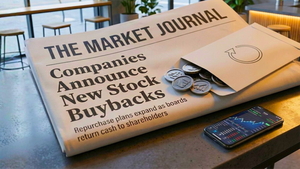
The focus on Berkshire today stems from its defensive posture. Throughout 2025, the company has aggressively liquidated its largest equity positions—most notably a massive reduction in its Apple stake—and suspended share buybacks. This suggests that the "Oracle of Omaha" sees little value in the broader market, positioning Berkshire as a massive, liquid "war chest" ready to capitalize on the next major economic disruption.
Historical Background
The story of Berkshire Hathaway is the quintessential American business saga. Originally a struggling group of textile milling plants in New England, the company was targeted by Warren Buffett in the early 1960s. After a dispute with management, Buffett bought a controlling interest in 1965, eventually shuttering the textile operations and pivoting toward the insurance sector.
The acquisition of National Indemnity in 1967 provided the "float"—premiums collected before claims are paid—that would become the engine of Berkshire's growth. Over the next six decades, Buffett and his late partner Charlie Munger (who passed in late 2023) transformed Berkshire into a sprawling empire. Key milestones include the full acquisition of GEICO in 1996, the purchase of Burlington Northern Santa Fe (BNSF) in 2010, and the aggressive expansion into energy through Berkshire Hathaway Energy (BHE). By 2025, Berkshire has evolved from a simple investment vehicle into a diversified industrial and financial powerhouse.
Business Model
Berkshire Hathaway operates through a decentralized model that grants extreme autonomy to its subsidiary managers. Its revenue sources are broadly categorized into four "pillars":
- Insurance: The core engine, comprising GEICO (personal auto), Berkshire Hathaway Reinsurance Group, and National Indemnity. This segment generates the "float," which stood at approximately $176 billion in late 2025.
- Regulated Utilities (BHE): A massive energy group providing electricity and gas to over 12 million customers. It is a leader in renewable energy investment but currently faces headwinds from wildfire-related liabilities.
- Railroad (BNSF): One of the largest freight railroad networks in North America, essential to the U.S. supply chain for grain, coal, and consumer goods.
- Manufacturing, Service, and Retailing (MSR): A diverse collection of businesses including Precision Castparts (aerospace), Lubrizol (chemicals), Dairy Queen, See’s Candies, and Duracell.
This model is designed to be anti-fragile, with profits from insurance and utilities providing steady capital even during industrial downturns.
Stock Performance Overview
Over the long term, Berkshire Hathaway has been one of the greatest wealth creators in history. However, its performance in 2025 has been characterized by "defensive underperformance."
- 1-Year Performance: In 2025, BRK.B shares have risen approximately 9.2%, significantly trailing the S&P 500’s ~20% return. This lag is largely due to the company’s massive cash position, which does not benefit from equity market rallies as much as fully invested peers.
- 5-Year Performance: Over the past five years, Berkshire has remained competitive with the broader market, offering lower volatility and superior downside protection during the 2022 bear market.
- 10-Year Performance: Berkshire continues to outperform the S&P 500 on a total return basis over the decade, though the "alpha" (excess return) has narrowed as the company's size makes it difficult to find needle-moving investments.
Financial Performance
Berkshire’s financial metrics in late 2025 are staggering. In the third quarter of 2025, the company reported operating earnings of $13.49 billion, a 34% increase year-over-year.
- Revenue Growth: While industrial segments saw modest 3-4% growth, the insurance segment saw a massive boost in investment income, reaching $3.2 billion in Q3 alone due to high yields on Treasury bills.
- The Cash Pile: The defining financial feature of 2025 is the $381.7 billion in cash and equivalents. This was bolstered by selling approximately 70% of Berkshire’s Apple (AAPL) stake since late 2023.
- Margins and Debt: Operating margins remain healthy, particularly at GEICO, which achieved a combined ratio of 84.3% in 2025, marking a successful technology-driven turnaround. The company maintains an AA+ credit rating with minimal parent-company debt.
Leadership and Management
The "post-Buffett" era officially begins on January 1, 2026.
- Greg Abel: As CEO-designate, Abel has already taken over the majority of operational duties. Known for his "operational rigor," Abel is credited with stabilizing the energy and railroad divisions.
- Ajit Jain: The legendary head of insurance operations remains in place, though succession planning within the insurance group has accelerated.
- Warren Buffett: At 95, Buffett will transition to the role of Chairman on January 1, 2026. While he will still oversee the investment portfolio for a time, his day-to-day involvement is winding down.
- Recent Changes: The departure of Todd Combs from GEICO in late 2025 to join JPMorgan Chase was a notable shift, with Nancy Pierce taking the helm of the auto insurer.
Products, Services, and Innovations
While not a "tech" company, Berkshire has embraced operational innovation to maintain its competitive edge:
- GEICO Telematics: Under new leadership, GEICO has finally integrated advanced telematics and AI-driven underwriting, allowing it to compete more effectively with Progressive (PGR) on pricing accuracy.
- BHE Renewable Transition: Berkshire Hathaway Energy is one of the largest investors in wind and solar in the U.S., positioning itself for the long-term shift away from fossil fuels.
- Precision Castparts: The company continues to innovate in high-performance alloys for the next generation of fuel-efficient aircraft engines.
Competitive Landscape
Berkshire competes on multiple fronts:
- Insurance: GEICO competes fiercely with Progressive and State Farm. In reinsurance, they face global giants like Munich Re and Swiss Re.
- Railroad: BNSF’s primary rival is Union Pacific (UNP). Competition is based on efficiency, safety records, and pricing.
- Capital Allocation: In its role as an acquirer, Berkshire competes with Private Equity firms (e.g., Blackstone, KKR). Berkshire’s advantage is its "permanent capital" and lack of exit requirements, which appeals to family-owned businesses.
Industry and Market Trends
Three major trends are currently impacting Berkshire:
- The "Interest Rate Cliff": As the Federal Reserve began cutting rates in late 2025, the yield on Berkshire’s $381 billion cash pile is expected to drop in 2026, creating an "earnings headwind."
- Climate Change Liabilities: Utility companies like PacifiCorp (under BHE) are facing billions in potential liabilities from wildfires, a trend that is forcing a re-evaluation of the regulated utility business model.
- The Reshoring of American Industry: Berkshire’s manufacturing and railroad assets are prime beneficiaries of the "Made in America" trend as supply chains shift away from China.
Risks and Challenges
- Succession Risk: The transition from Buffett to Abel is the most watched leadership change in corporate history. The "Buffett Premium" on the stock may evaporate if investors lose confidence in Abel’s capital allocation skills.
- The "Size Drag": With nearly $400 billion in cash, Berkshire must make massive acquisitions to move the needle. Finding "elephant-sized" deals at attractive prices is increasingly difficult.
- Regulatory Scrutiny: Increased oversight on rail safety and utility emissions could compress margins at BNSF and BHE.
Opportunities and Catalysts
- The "Next Big Deal": The current cash hoard suggests Berkshire is waiting for a market correction or a significant distressed-asset opportunity. A major acquisition in 2026 would be a massive catalyst for the stock.
- Occidental Petroleum (OXY): Berkshire’s increasing stake in OXY (now over 28%) and its recent $9.7 billion acquisition of OxyChem suggest a deeper bet on the future of traditional energy and petrochemicals.
- Japanese Trading Houses: Berkshire’s investments in the "Sogo Shosha" (Mitsubishi, Itochu, etc.) continue to provide high-dividend, diversified international exposure.
Investor Sentiment and Analyst Coverage
Wall Street sentiment is currently "cautiously bullish." Analysts from firms like UBS and Morgan Stanley appreciate the company’s "fortress balance sheet" but express concern over the lack of near-term growth catalysts. Retail sentiment remains intensely loyal; the annual "Woodstock for Capitalists" in Omaha remains the most attended shareholder meeting in the world. However, hedge funds have been neutral on the stock in late 2025, waiting for clarity on how Abel will deploy the accumulated cash.
Regulatory, Policy, and Geopolitical Factors
- Tax Policy: Warren Buffett has explicitly stated that he is selling Apple stock partly to lock in the current 21% corporate tax rate, fearing hikes in 2026-2027 to address the U.S. deficit.
- Antitrust: Berkshire’s diverse holdings generally keep it under the radar of "Big Tech" style antitrust suits, but its railroad and utility segments are subject to constant federal and state regulation.
- Geopolitics: Berkshire’s reduction in Apple and its shift toward domestic energy and Japanese trading houses suggest a strategic move to insulate the portfolio from U.S.-China tensions.
Conclusion
As we approach 2026, Berkshire Hathaway remains the ultimate fortress in an uncertain global economy. While its 2025 performance has been muted by a massive cash-heavy defensive stance, this "coiled spring" positioning is exactly what long-term shareholders have come to expect. The impending transition to Greg Abel marks the end of an era, but the "Berkshire System"—decentralized operations, cost-free float, and extreme financial strength—appears built to outlast its founders. For investors, the key watch-item for 2026 will not be the quarterly earnings, but how the new leadership chooses to deploy its $381 billion "war chest" in a world of falling interest rates and shifting geopolitical alliances.
This content is intended for informational purposes only and is not financial advice.