As of December 23, 2025, the landscape of American healthcare and retail looks fundamentally different than it did just two years ago. At the center of this transformation is the story of Walgreens Boots Alliance (Nasdaq: WBA), a company that was once a bedrock of the Dow Jones Industrial Average but has recently undergone a seismic shift. Following a decade of strategic missteps, mounting debt, and a brutal squeeze in the pharmacy sector, WBA was taken private by private equity firm Sycamore Partners in August 2025.
This transition marked the end of an era for the 124-year-old pharmacy giant as a public entity. Today, WBA exists as a collection of fragmented, standalone businesses undergoing radical turnarounds. This article explores the rise, fall, and current restructuring of the company, offering an analyst-level autopsy of its public life and a speculative look at its private future.
Historical Background
The Walgreens story began in 1901 when Charles R. Walgreen Sr. purchased the Chicago pharmacy where he worked. The company gained national prominence during the Prohibition era; by 1927, it had 110 stores and was credited with inventing the malted milkshake, a strategic move to drive foot traffic during the ban on alcohol.
For nearly a century, Walgreens was the gold standard of the "corner drugstore." However, the modern era of the company began in 2014 with the completion of its merger with Alliance Boots, a move championed by Italian billionaire Stefano Pessina. This created a global pharmacy-led, health, and wellbeing enterprise. The newly formed Walgreens Boots Alliance (WBA) aimed to leverage global scale to negotiate better drug prices.
In the late 2010s and early 2020s, WBA attempted a major pivot under former CEO Rosalind Brewer, seeking to become a primary healthcare provider rather than just a pharmacy. This led to multi-billion dollar investments in VillageMD, Shields Health Solutions, and CareCentrix. However, the high costs of these acquisitions, combined with a decline in retail foot traffic and the opioid litigation crisis, ultimately broke the company’s financial back.
Business Model
Prior to its 2025 privatization, WBA’s business model was divided into three primary segments:
- U.S. Retail Pharmacy: The core engine, generating the vast majority of revenue through prescription drug sales and front-end retail (OTC meds, beauty, and groceries).
- International: Centered on Boots UK, the United Kingdom’s leading pharmacy and beauty retailer, as well as pharmaceutical wholesale operations in Germany.
- U.S. Healthcare: The most ambitious and ultimately most troubled segment, providing primary care through VillageMD clinics, specialty pharmacy via Shields Health, and post-acute care through CareCentrix.
In its current private state under Sycamore Partners, this integrated model has been dismantled. The company has been split into five independent units, allowing each to focus on its own balance sheet without the drag of the others. The U.S. Walgreens business has returned to a "back-to-basics" retail pharmacy model, while the healthcare assets are being prepared for divestiture.
Stock Performance Overview
The decade leading up to the 2025 buyout was a period of catastrophic value destruction for WBA shareholders.
- 10-Year Horizon: From its peak in 2015 at nearly $96 per share, the stock entered a long-term secular decline.
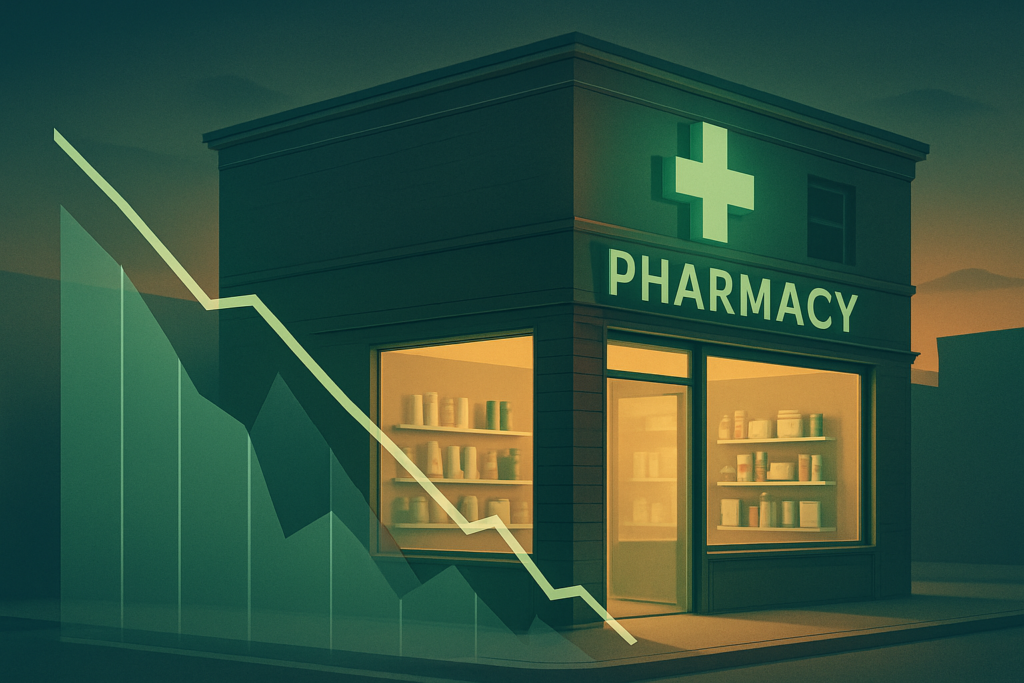
- 5-Year Horizon: The 2020-2025 period saw WBA lose roughly 75% of its value as it struggled to integrate its healthcare acquisitions and manage a massive debt load.
- The Final Move: In February 2024, WBA was removed from the Dow Jones Industrial Average, replaced by Amazon—a symbolic passing of the torch from traditional retail to digital fulfillment.
- The Buyout: In August 2025, the stock was delisted at a final buyout price of $11.45 per share, a fraction of its historical highs.
Financial Performance
WBA’s financial collapse was driven by a "perfect storm" of factors. By late 2024, the company was grappling with a long-term debt load exceeding $8 billion.
In early 2025, for the first time in over 90 years, the company suspended its dividend—a move that alienated its remaining core of retail and institutional income investors. Profit margins in the pharmacy segment were squeezed to razor-thin levels by Pharmacy Benefit Managers (PBMs), while the VillageMD clinics continued to burn cash at an unsustainable rate.
The 2025 privatization was essentially a rescue mission. The $23.7 billion enterprise value (including debt) at which Sycamore Partners took the company private reflected a valuation of less than 0.2x sales—a level typically reserved for distressed retailers on the brink of liquidation.
Leadership and Management
Tim Wentworth, a veteran of Express Scripts, was brought in as CEO in late 2023 to orchestrate a turnaround. Wentworth’s strategy focused on aggressive cost-cutting, including the closure of 1,200 underperforming stores and the divestiture of non-core assets. While Wentworth was praised for his realism, he was ultimately fighting an uphill battle against a balance sheet he didn't create.
Following the 2025 buyout, Mike Motz, formerly of Staples and Shoppers Drug Mart, was appointed CEO of the standalone Walgreens U.S. business. Motz's mandate is purely operational: improve the customer experience, reduce "shrink" (retail theft), and optimize the supply chain. Meanwhile, Ornella Barra continues to lead the Boots UK division, which is seen as the "crown jewel" of the former conglomerate.
Products, Services, and Innovations
Under private ownership, Walgreens has pivoted away from primary care clinics and toward "Pharmacy-to-Door" digital services.
- Micro-Fulfillment Centers: The company has doubled down on automated fulfillment centers that can process thousands of prescriptions an hour, reducing the workload on in-store pharmacists.
- Own-Brand Strategy: To combat margin pressure, Walgreens is aggressively expanding its "No7" and "Walgreens" brand beauty and health products, which offer significantly higher margins than national brands.
- GLP-1 Fulfillment: One of the few growth bright spots in 2024-2025 was the surge in demand for GLP-1 weight-loss drugs. Walgreens has positioned its specialty pharmacy arm to be a primary distributor for these high-cost medications.
Competitive Landscape
Walgreens faces a "barbell" competitive threat:
- CVS Health (CVS): Unlike Walgreens, CVS successfully integrated its Aetna insurance arm and Caremark PBM, creating a "closed-loop" system that directs patients to its own stores. This structural advantage left Walgreens at a permanent disadvantage in terms of patient steering.
- Amazon (AMZN): Amazon Pharmacy’s expansion into same-day delivery in major metropolitan areas has eroded Walgreens' core value proposition: convenience.
- Walmart and CostCo: For "front-end" retail, price-conscious consumers have increasingly abandoned Walgreens in favor of bulk retailers and discount chains like Dollar General.
Industry and Market Trends
The retail pharmacy sector in late 2025 is defined by "pharmacy deserts." As WBA and its competitors closed thousands of stores to save costs, large swaths of the U.S. population have been left without easy access to medication.
Additionally, the rise of "Direct-to-Consumer" (DTC) telehealth platforms has bypassed traditional retail pharmacies for routine prescriptions. The industry is also facing a labor crisis; a shortage of qualified pharmacists has led to reduced operating hours and increased wages, further pressuring the bottom line.
Risks and Challenges
The risks for the now-private Walgreens remain significant:
- The Debt overhang: Sycamore Partners must manage the massive debt used to fund the acquisition in a higher-for-longer interest rate environment.
- Opioid Litigation: The company remains on the hook for billions in settlements related to the opioid crisis, which are paid out over several years.
- Retail Theft: "Shrink" remains a major headwind for urban stores, forcing expensive security measures or outright store closures.
Opportunities and Catalysts
Despite the challenges, the fragmentation of WBA provides several catalysts for value creation:
- The Boots IPO: Market analysts widely expect Sycamore to list Boots UK on the London Stock Exchange in late 2026 or 2027. Boots remains a highly profitable and beloved brand in the UK, and an IPO could recoup a large portion of the initial purchase price.
- VillageMD Sale: The ongoing liquidation of VillageMD assets (including Summit Health) could provide a payout to former WBA shareholders via the Contingent Value Rights (CVRs) issued during the buyout.
- Specialized Pharmacy: By focusing on high-margin specialty drugs for complex diseases, the Shields Health segment remains a high-growth asset.
Investor Sentiment and Analyst Coverage
At the time of its delisting, analyst sentiment on WBA was at an all-time low. Most Wall Street firms had "Sell" or "Underweight" ratings on the stock. Retail sentiment was characterized by exhaustion, as long-term "buy and hold" investors saw their capital gains and dividends evaporate.
Today, institutional interest has shifted to the credit markets. Bondholders are closely watching Walgreens’ ability to generate enough cash flow to service its restructured debt. Meanwhile, equity analysts are monitoring the "shadow performance" of Boots in anticipation of its return to the public markets.
Regulatory, Policy, and Geopolitical Factors
The single biggest regulatory factor affecting WBA is PBM reform. Legislation passed in late 2024 aimed at increasing transparency in how Pharmacy Benefit Managers negotiate drug prices. While intended to help independent pharmacies, the long-term impact on giant chains like Walgreens is still being determined.
Furthermore, the 2024 US election results have led to shifts in Medicaid and Medicare reimbursement rates, which directly impact Walgreens’ revenue per prescription. Geopolitically, the company’s exposure is largely limited to the UK and Germany, though global supply chain disruptions continue to affect the availability of certain generic medications.
Conclusion
The story of Walgreens Boots Alliance is a cautionary tale of the "conglomerate discount" and the dangers of over-leveraged expansion. By trying to be everything to everyone—a global wholesaler, a retail giant, and a primary care provider—WBA lost focus on its core strength: the local pharmacist-patient relationship.
As we look toward 2026, the success of the new, fragmented Walgreens will depend on its ability to reclaim its identity as a convenient, retail-first health destination. For former shareholders, the focus is now on the CVRs and the potential Boots IPO. For the broader market, WBA’s fall serves as a stark reminder that even the most historic brands are not immune to the disruptive forces of digital commerce and structural shifts in healthcare economics.
This content is intended for informational purposes only and is not financial advice.