As the first trading week of 2026 kicks off, all eyes in the technology and real estate sectors are fixed on Applied Digital (Nasdaq: APLD). The company, which has successfully reinvented itself from a cryptocurrency hosting provider into a premier architect of high-density artificial intelligence infrastructure, saw its stock surge nearly 12% today, January 2, 2026, closing at $27.46. This rally comes just days before the company is scheduled to report its fiscal second-quarter 2026 earnings on January 7, an event that many analysts believe will serve as a definitive litmus test for the "AI Factory" investment thesis that dominated the market throughout 2025.
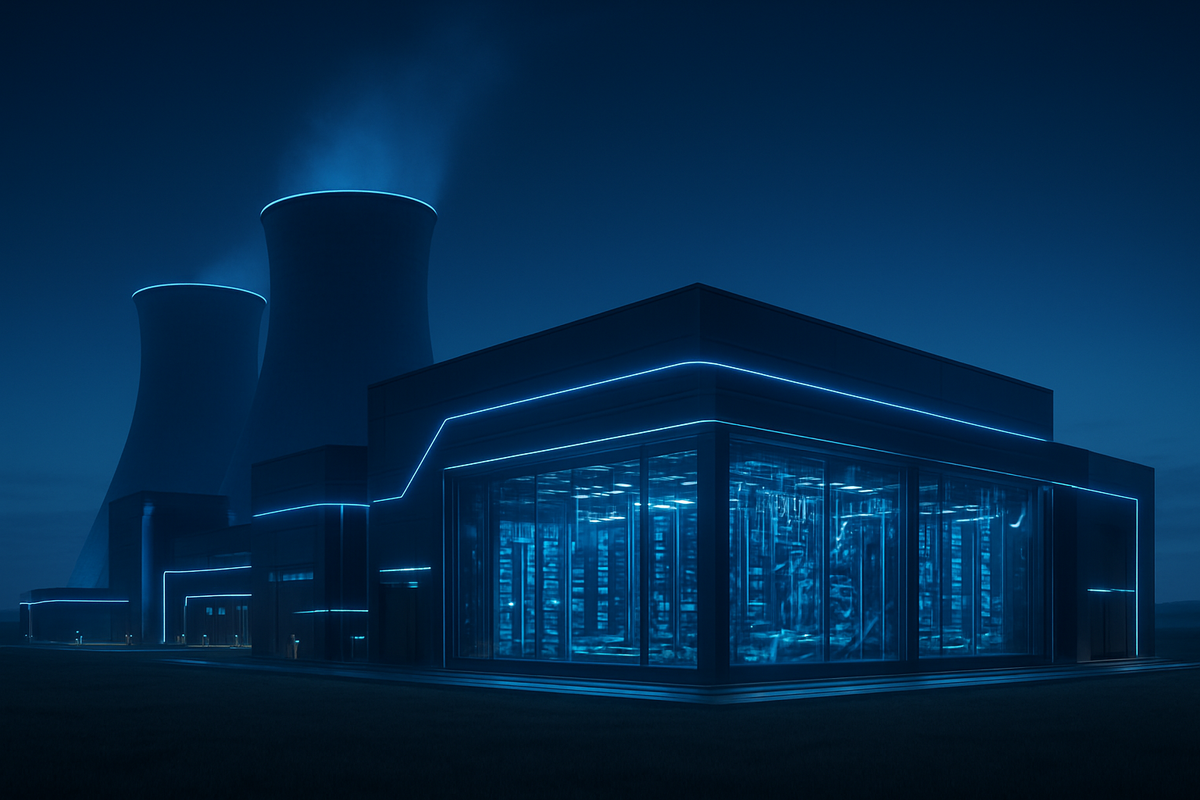
The immediate implications of the upcoming earnings report are significant. Applied Digital is no longer just a "construction-phase" story; it is transitioning into a recurring revenue powerhouse. With its massive 100-megawatt (MW) Building 1 at the Ellendale, North Dakota campus now fully operational and "Ready for Service," investors are eager to see the first substantial evidence of cash flow from its multi-billion-dollar lease agreements. The company’s ability to execute on its "Polaris Forge" model—data centers specifically designed to handle the extreme power and cooling demands of next-generation GPUs—is widely seen as the blueprint for the next phase of the AI revolution.
The journey to this pivotal January earnings call has been marked by aggressive capital deployment and strategic pivots. Throughout 2025, Applied Digital focused on scaling its "Polaris Forge" facilities, which are designed to support rack densities of up to 120kW—nearly ten times the density of traditional data centers. This specialized focus culminated in the successful energization of the first 100MW phase of its Ellendale campus in late 2025. This facility is part of a landmark 15-year lease agreement with CoreWeave, a prominent AI hyperscaler backed by NVIDIA (Nasdaq: NVDA), valued at approximately $11 billion.
The timeline leading to this moment was accelerated by a series of bold financial moves. In late 2025, Applied Digital secured a $5 billion preferred equity facility from Macquarie (ASX: MQG) to fund its massive development pipeline. This was followed by the groundbreaking of "Polaris Forge 2" in Harwood, North Dakota, a $3 billion project that has already secured a $5 billion, 15-year lease from an unnamed U.S.-based investment-grade hyperscaler. Just last week, on December 29, 2025, the company announced the spin-off of its cloud services division to form ChronoScale, a move designed to separate its high-growth GPU-as-a-service business from its core infrastructure and real estate assets.
Key stakeholders, including NVIDIA—which holds a direct equity stake in Applied Digital—and major institutional investors, have increasingly viewed the company as a critical gatekeeper in the AI supply chain. Initial market reactions to the recent expansion updates have been overwhelmingly positive, as evidenced by the stock’s 237% return over the course of 2025. However, the upcoming January 7 report will be the first time the market sees the actual financial impact of the Ellendale Building 1 revenue ramp, with analysts projecting quarterly revenue of $82.2 million, a significant jump from the $64.2 million reported in the previous quarter.
The primary winners in the current environment are the specialized infrastructure providers like Applied Digital and its primary cooling partner, Vertiv (NYSE: VRT). Vertiv has seen its shares rise 43% in the last year as it provides the liquid cooling systems essential for Applied Digital’s high-density racks. For these companies, the "power bottleneck" of 2026 is a competitive moat; because they secured massive power allocations and grid connections years in advance, they are among the few players capable of hosting the 100,000-GPU clusters that modern AI models require.
Conversely, traditional data center Real Estate Investment Trusts (REITs) like Equinix (Nasdaq: EQIX) and Digital Realty (NYSE: DLR) have faced a more challenging transition. While both companies are aggressively pivoting to AI, they are burdened by legacy portfolios that require expensive retrofitting to handle liquid cooling and high-density power requirements. While Digital Realty has recently seen a "Buy" upgrade due to its $6.4 billion development pipeline, these legacy giants are effectively playing catch-up to the purpose-built "AI Factories" being pioneered by smaller, more agile firms.
In the hardware space, Super Micro Computer (Nasdaq: SMCI) remains a complex player. While it stands to win from the massive demand for liquid-cooled server racks, it spent much of 2025 recovering from governance issues and margin pressure. For companies like Super Micro, the success of Applied Digital’s facilities is a double-edged sword: it provides a massive venue for their hardware but also highlights the extreme technical standards they must meet to remain competitive in a world where air cooling is no longer sufficient.
The rise of Applied Digital fits into a broader industry trend known as the "Gigawatt Barrier." By early 2026, the primary constraint on AI development has shifted from a shortage of chips to a shortage of power. Hyperscalers are now seeking "Sovereign AI" solutions—infrastructure that is not only high-performance but also geographically and politically secure. Applied Digital’s decision to build massive clusters in the American Midwest, where power is relatively abundant and cooling costs are lower, reflects a strategic alignment with these national security and energy efficiency trends.
This event also highlights the mandatory shift toward liquid cooling. In 2026, liquid cooling adoption in new data centers has reached approximately 22%, up from single digits just two years ago. The technical requirements of NVIDIA’s Blackwell and upcoming Rubin architectures have made traditional air cooling obsolete for top-tier AI workloads. Applied Digital’s success or failure in maintaining these complex liquid-cooled environments will set the standard for the entire industry, serving as a real-world test case for the viability of 150kW-per-rack densities.
Historically, this transition mirrors the shift in the early 2000s from general-purpose web hosting to specialized cloud providers. Much like Amazon (Nasdaq: AMZN) redefined the market with AWS, the "AI Factory" model represents a structural break from the past. However, the regulatory environment is also tightening; as data centers begin to consume a larger share of the national power grid, companies like Applied Digital may face increased scrutiny regarding their energy sources and environmental impact, potentially leading to new policy requirements for on-site renewable energy or nuclear small modular reactors (SMRs).
Looking ahead, the short-term focus for Applied Digital will be the successful completion of Building 2 at Ellendale and the continued build-out of the Harwood campus. The market will be watching closely for any signs of delays in construction or power delivery, which have plagued other players in the sector. A major strategic pivot may also be on the horizon as the company explores the integration of on-site power generation to mitigate the risks of grid saturation.
In the long term, the successful spin-off of ChronoScale will allow Applied Digital to market itself as a "pure-play" infrastructure company, potentially making it an attractive acquisition target for a major hyperscaler or a larger infrastructure fund. However, the challenge will be maintaining its lead as larger competitors eventually finish their own high-density retrofits. The "land grab" for power that defined 2024 and 2025 is nearing its end, and the next few years will be defined by operational excellence—actually keeping these massive, heat-intensive machines running without interruption.
Potential scenarios range from a "blue sky" outcome where Applied Digital becomes the backbone of a new era of Sovereign AI, to a more cautious scenario where rising interest rates or a slowdown in AI model training demand leads to a glut of specialized capacity. For now, the momentum is clearly with the builders.
The upcoming earnings report from Applied Digital is more than just a financial update; it is a progress report on the physical foundation of the AI era. The key takeaways for investors are the successful transition to recurring revenue, the massive scale of the contracted backlog, and the company's leadership in the critical field of liquid cooling. As the stock trades near recent highs, the market has already priced in a significant amount of success, leaving little room for error in execution.
Moving forward, the market will likely continue to reward companies that control the "three pillars" of AI infrastructure: power, space, and cooling. Applied Digital currently sits at the intersection of all three. Investors should watch for updates on the Harwood hyperscaler contract, any further equity or debt financing to fund the 4-gigawatt pipeline, and the performance of the newly independent ChronoScale.
As we move deeper into 2026, the distinction between "AI hype" and "AI utility" will be drawn by the companies that can actually deliver the power to run the models. Applied Digital has positioned itself as the landlord of this new digital frontier, and the coming months will determine if it can sustain its role as the premier architect of the AI age.
This content is intended for informational purposes only and is not financial advice.