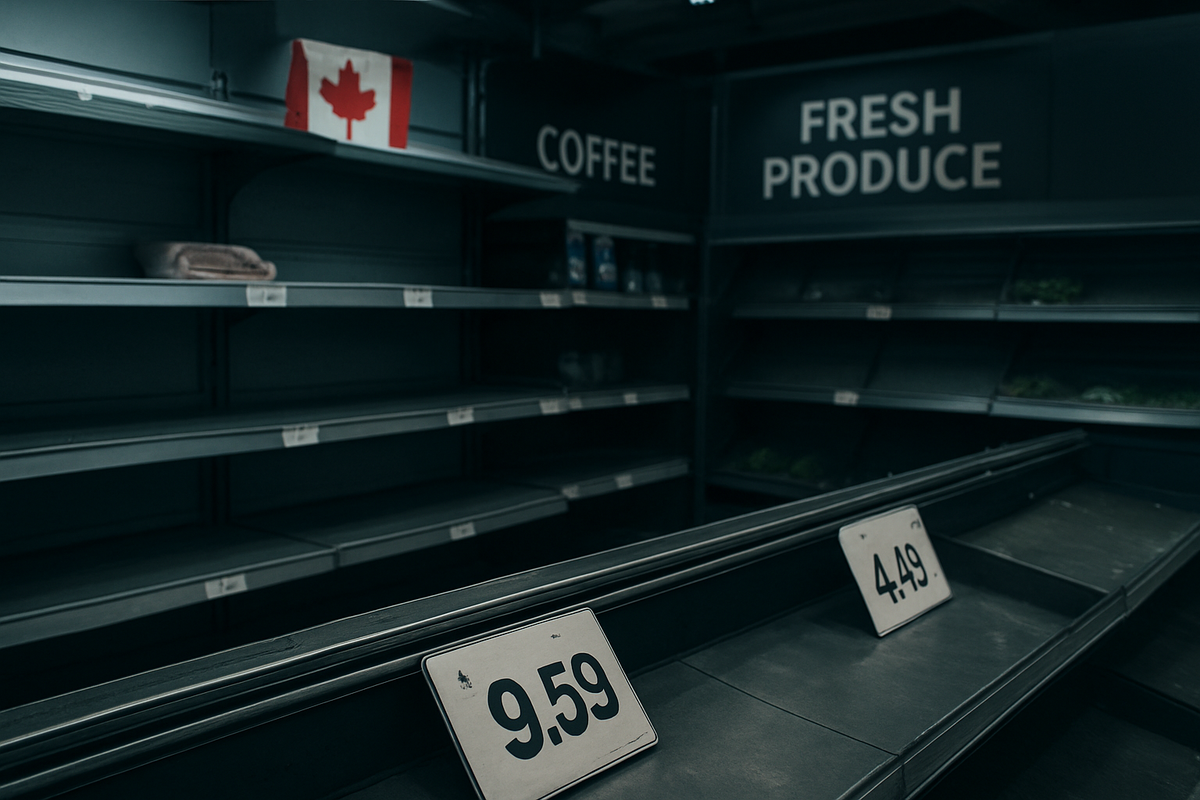
Canada's annual inflation rate has shown signs of stabilization, hovering at 2.2% in November 2025, but a closer look reveals a concerning trend: grocery prices continue their relentless climb, significantly outpacing overall inflation. This persistent surge in the cost of food, particularly staples, is deeply rooted in underlying global commodity price trends, exerting immense pressure on Canadian households and signaling a complex challenge for the nation's economy. Consumers are increasingly forced to make difficult choices, altering their shopping habits in a desperate bid to manage ever-growing grocery bills, while the broader economic landscape grapples with the ripple effects of this sustained inflationary pressure.
The Unyielding Rise of Food Costs: A Detailed Look at Canada's Grocery Crisis
The current state of Canada's grocery inflation paints a stark picture for consumers. In November 2025, food purchased from stores saw a year-over-year increase of 4.7%, marking the fastest pace since late 2023 and significantly surpassing the overall 2.2% inflation rate. This acceleration from October's 3.4% rise underscores the ongoing challenges. On a monthly basis, grocery prices jumped by a substantial 1.9% in November, the largest month-over-month increase since January 2023. These figures highlight that while other sectors may see easing price pressures, the grocery cart remains a heavy burden.
The timeline leading to this crisis is a confluence of global and domestic factors. The early 2020s, marked by the COVID-19 pandemic, initiated widespread supply chain disruptions and labor shortages. By late 2021, food price increases began to consistently outpace headline inflation. 2022 saw inflation peak to a 40-year high, with food purchased in stores rising 11.4% year-over-year in September, driven by adverse weather, high oil and gas prices, and the Russian invasion of Ukraine. In 2023, despite a slowdown in overall CPI, food prices still rose 7.8% annually. By 2024, forecasts continued to predict significant food price increases, with analysis suggesting that the Bank of Canada's (TSX: BOC) money supply increases in early 2020 contributed to price escalation. The current re-acceleration in November 2025 underscores that these pressures are far from resolved.
Specific food items have been hit particularly hard. Beef prices surged by 17.7% in November 2025, primarily due to shrinking cattle inventories across North America, a consequence of prolonged drought in leading beef-producing regions. Coffee prices witnessed an astonishing 27.8% jump year-over-year in November, with roasted or ground coffee increasing by 41% in September, attributed to adverse weather in coffee-growing regions and U.S. tariffs. Fresh fruit prices also saw a significant acceleration, marking their biggest rise since December 2023. Other categories like nuts, seeds, fruit juices, and confectionery have also experienced notable increases, collectively pushing the average monthly cost of groceries for a Canadian family from $974 in 2019 to $1,227 in 2024, with projections of an additional $994.63 in 2026.
Key players and stakeholders in this scenario include major Canadian grocery chains like Loblaw Companies Limited (TSX: L), Metro Inc. (TSX: MRU), and Empire Company Limited (TSX: EMP.A) (parent of Sobeys), who are under intense public and governmental scrutiny regarding their pricing practices. The Bank of Canada (TSX: BOC) has responded to overall inflation with interest rate hikes, though their direct impact on globally influenced food prices is limited. The federal government has introduced measures like the one-time Grocery Rebate and a temporary GST/HST holiday on select food items. Initial market reactions reflect deep consumer concern, with many altering shopping habits, seeking discounts, and increasing reliance on food banks. There's also a growing erosion of trust in major food retailers amidst accusations of "greedflation," while retailers themselves cite increased input costs and supply chain disruptions.
Corporate Fortunes in Flux: Winners and Losers in the Inflationary Environment
Canada's persistent grocery inflation has created a distinct divide among public companies in the food sector, with some strategically positioned to weather the storm and even thrive, while others face significant headwinds.
Among the major grocery retailers, companies with strong discount banners and robust private-label offerings appear to be the primary beneficiaries. Loblaw Companies Limited (TSX: L), for instance, has seen its profits jump as consumers shift to its No Frills and Maxi discount formats, which comprise about 60% of its grocery sales. Its private-label brands like No Name and President's Choice are also experiencing surging demand. Loblaw's ability to effectively negotiate with suppliers and its diversified business model, including the strong performance of its pharmacy segment (Shoppers Drug Mart), have allowed it to maintain profitability. Similarly, Metro Inc. (TSX: MRU) has benefited from the migration to its discount banners like Food Basics and Super C, and increased sales of its private-label products. Metro's recent $1 billion supply chain modernization is also expected to enhance efficiency and support future profit growth. Empire Company Limited (TSX: EMP.A), operating banners like Sobeys and FreshCo, has seen sales growth driven by inflation and the expansion of its discount FreshCo banner. While Empire has experienced some profit fluctuations due to non-core activities, its core grocery business, particularly its discount formats and private labels, shows resilience. These retailers are winning by adapting to value-conscious consumers and leveraging their scale and operational efficiencies.
Conversely, major food producers are generally facing greater challenges due to their direct exposure to volatile commodity prices and escalating input costs. Maple Leaf Foods Inc. (TSX: MFI), a prominent protein-focused consumer packaged goods company, has been highly susceptible to fluctuations in pork and feed markets, as well as rising energy, labor, and transportation costs. The company has reported financial losses, attributing them to the "unprecedented impacts of the post-pandemic economy, combined with extreme weather events and war." While Maple Leaf Foods aims to pass on these costs and has undertaken strategic restructuring (spinning off its pork operations) and capital projects to enhance efficiency, it remains vulnerable to commodity market volatility. Similarly, Saputo Inc. (TSX: SAP), a global dairy processor, is highly sensitive to milk prices (a primary commodity input) and other operational costs. Food processors, in general, struggle to fully pass on all cost increases in highly competitive markets, making them more susceptible to profit erosion during periods of high commodity inflation. Their long-term success hinges on their ability to innovate, secure stable supply chains, and efficiently manage these escalating costs.
Beyond the Aisles: Wider Implications and Historical Parallels
The sustained grocery inflation in Canada, intricately linked to global commodity price trends, carries significant wider implications that extend far beyond the immediate impact on household budgets. This phenomenon is not isolated but rather fits into broader industry trends, creating ripple effects across the entire food ecosystem, prompting regulatory scrutiny, and drawing comparisons to historical inflationary periods.
Globally, Canada's experience mirrors a broader trend of food inflation driven by a confluence of factors: elevated input costs for farmers (fuel, fertilizer, animal feed), geopolitical conflicts like the war in Ukraine disrupting grain and fertilizer markets, persistent global supply chain fragilities, and increasingly severe climate change-induced weather events impacting harvests worldwide. Domestically, Canada's highly concentrated grocery market, dominated by a few major players, exacerbates these pressures, potentially limiting competition and choice. This market structure, coupled with the widespread public perception of "greedflation" amidst reports of increased profits by major retailers, has fueled consumer distrust and calls for greater transparency.
The ripple effects are profound. For grocery retailers, the intense public and political scrutiny over "greedflation" has become a significant reputational challenge. They must navigate supplier demands for price increases while trying to maintain consumer loyalty. Food producers and manufacturers, while facing their own escalating input costs, often struggle to pass these on due to competitive pressures, leading to reduced growth and, in some cases, restructuring. Independent grocers, operating on thin margins, find it increasingly difficult to compete with the scale and negotiating power of the larger chains. Furthermore, international trade disputes and tariffs, such as those between Canada and the U.S., create increased costs and volatility for the food industry on both sides of the border, impacting supply chains and consumer prices.
In response, regulatory and policy interventions have become increasingly prominent. Canada's Competition Bureau has actively investigated the grocery sector, advocating for increased competition, harmonized unit pricing, and limits on restrictive property controls that hinder new store openings. The federal government has introduced targeted relief measures like the one-time Grocery Rebate and a temporary GST/HST holiday. A significant development is the upcoming implementation of the Canada Grocery Code of Conduct in January 2026, which aims to foster fairer relationships between grocers and suppliers, though its effectiveness will depend on robust enforcement. Calls for strengthening anti-monopoly laws and even "windfall taxation" on perceived excessive profits also highlight the political pressure on the industry.
Historically, Canada has experienced periods of high food inflation before, notably in the 1970s and early 1980s, with food inflation peaking at over 20% in July 1978. While the current rates may not match those historical highs, the distinguishing characteristic of the present inflationary period is the simultaneous occurrence of multiple, complex pressures—pandemic-induced supply chain disruptions, labor shortages, geopolitical conflicts, and severe climate events—making it a uniquely challenging and multifaceted environment compared to past episodes.
The Road Ahead: Navigating Persistent Inflation
Looking to the future, Canada's grocery inflation is poised to remain a defining economic challenge, necessitating strategic adaptations across the food supply chain and continued vigilance from consumers and policymakers. The short-term outlook, particularly for 2026, suggests little immediate relief. Canada's Food Price Report forecasts an overall increase in food prices of 4% to 6%, translating to an additional nearly $1,000 for the average family of four's annual grocery bill.
Specific categories are expected to drive this continued surge. Meat prices, especially beef and chicken, are projected to see the largest jumps (5% to 7%), primarily due to persistent drought-induced reductions in cattle herds and insufficient domestic chicken production. Vegetables and dry goods are also anticipated to become more expensive. Beyond 2026, the long-term outlook remains influenced by systemic factors such as climate change, which will continue to disrupt agricultural production, and persistent global supply chain instabilities and labor shortages.
Businesses across the food sector must implement strategic pivots to navigate this environment. Supply chain optimization, including diversifying suppliers and exploring local sourcing, will be crucial to mitigate cost fluctuations. Dynamic pricing models, operational efficiency improvements through automation and technology adoption, and product innovation focusing on plant-based alternatives, functional foods, and sustainable packaging are key for maintaining competitiveness. Customer engagement through loyalty programs and transparent communication about price changes will also be vital in retaining consumer trust. The full implementation of the Grocery Code of Conduct in January 2026 could also present opportunities for more equitable supplier-retailer relationships.
Emerging market opportunities include expanding Canadian agri-food exports into new international markets, particularly the Indo-Pacific, driven by a growing global middle class. Domestically, continued consumer interest in home cooking, meal kits, and e-commerce offers avenues for growth for adaptable businesses. However, challenges persist, including ongoing trade disputes, persistent labor shortages in agriculture, and the overarching issue of consumer distrust regarding pricing.
For consumers, the outlook points to increased financial strain and heightened food insecurity, particularly for vulnerable households. Shopping habits will likely remain altered, with a continued emphasis on value, discounts, and private-label brands. The disparity between wage growth and the rising cost of essentials will continue to squeeze household budgets. For the broader economy, moderate GDP growth is expected, with food price growth remaining a persistent component exceeding the general inflation rate. The Bank of Canada will likely maintain a cautious monetary policy stance, while government interventions will continue to focus on targeted relief and strengthening competition in the grocery sector.
A Lasting Imprint: Summarizing the Challenge and Charting the Future
Canada's journey through this prolonged period of grocery inflation is more than a fleeting economic blip; it represents a significant structural shift with profound and lasting implications for consumers, the food industry, and the nation's economic fabric. The key takeaway is the undeniable persistence of high food prices, which continue to outpace overall inflation, driven by a complex interplay of global commodity market volatility, supply chain fragilities, geopolitical events, and climate change. This has fostered an environment where essential food items are increasingly unaffordable for many, leading to widespread food insecurity and a fundamental shift in consumer behavior towards frugality and strategic shopping.
Moving forward, the market is set to remain challenging. Forecasts indicate continued elevated grocery prices into 2026 and potentially beyond, with specific categories like meat, vegetables, and dry goods bearing the brunt of increases. The full implementation of the Grocery Code of Conduct in January 2026 represents a critical juncture, aiming to foster fairer practices, but its ultimate impact on consumer prices and market competition remains to be seen. The retail landscape will likely see discount grocers solidify their gains, while all players must innovate in supply chain resilience, pricing strategies, and product differentiation to meet evolving consumer demands.
The lasting impact of this inflationary period will be multifaceted. It has permanently instilled a heightened sense of price sensitivity and strategic shopping habits in Canadians, a trend unlikely to fully revert. The issue of food security has been brought to the forefront, demanding sustained policy attention and systemic solutions. Furthermore, the intense public and political scrutiny of major grocery chains over "greedflation" accusations has likely set a precedent for greater transparency, accountability, and potentially more regulatory oversight in the future. The necessity for more resilient and diversified food supply chains, both domestically and internationally, has also become undeniably clear.
For investors, the coming months demand acute vigilance. Monitoring both general and food-specific Consumer Price Index (CPI) reports will be crucial for understanding inflationary trends and anticipating the Bank of Canada's (TSX: BOC) monetary policy decisions. The performance of the Canadian dollar, geopolitical developments affecting trade and commodity markets, and climate-related impacts on agriculture will all be critical external factors. Domestically, investors should closely track consumer spending patterns, particularly the continued shift towards discount formats and private labels, and the operational performance of major grocery retailers like Loblaw Companies Limited (TSX: L), Metro Inc. (TSX: MRU), and Empire Company Limited (TSX: EMP.A). The effectiveness of the new Grocery Code of Conduct and any further regulatory actions will also be key indicators of the evolving market landscape. Investing in this sector will require agility and a deep understanding of these complex, interconnected drivers to navigate what promises to be a perpetually challenging, yet dynamic, food market.
This content is intended for informational purposes only and is not financial advice