Introduction
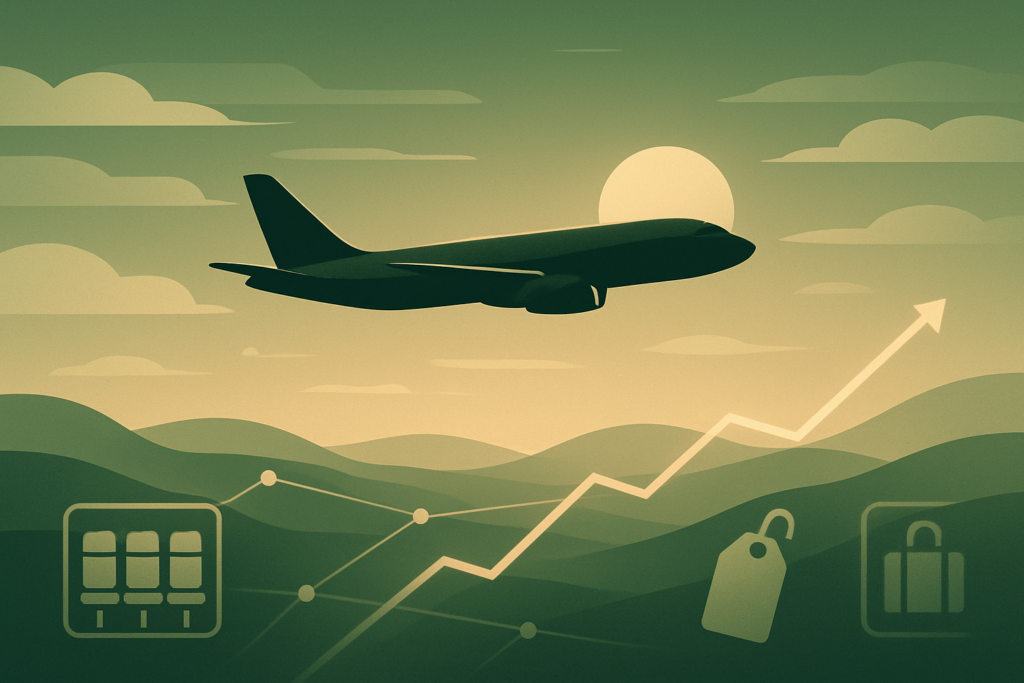
As of January 23, 2026, Southwest Airlines (NYSE: LUV) stands at a crossroads between its legendary past and a pragmatically modern future. Long regarded as the "maverick" of the skies, the airline spent much of 2024 and 2025 undergoing a fundamental identity shift. For decades, Southwest was defined by three things: open seating, "Bags Fly Free," and an unyielding commitment to simplicity. However, stagnant stock performance and pressure from activist investors forced a metamorphosis. Today, the Southwest in focus is a leaner, more traditional competitor that has traded some of its quirky charm for the ancillary revenue models and premium tiering that investors have long demanded.
Historical Background
Founded in 1971 by the late Herb Kelleher and Rollin King, Southwest Airlines began as a "Texas Triangle" carrier serving Dallas, Houston, and San Antonio. Kelleher’s philosophy was simple: turn planes around quickly, fly a single aircraft type (the Boeing 737), and treat employees like family. This formula revolutionized the industry, making air travel accessible to the middle class through a low-cost, point-to-point model that bypassed the traditional hub-and-spoke systems used by legacy carriers. Over the next five decades, Southwest grew into the largest domestic carrier in the United States, famously maintaining a streak of 47 consecutive years of profitability until the COVID-19 pandemic.
Business Model
Historically, Southwest's business model relied on high asset utilization and a "no-frills" approach that attracted leisure travelers. By 2026, this model has evolved into a "hybrid" strategy. The core remains a point-to-point network utilizing an all-Boeing 737 fleet, which reduces maintenance and training costs. However, the revenue mix has shifted. While passenger fares remain the primary driver, Southwest has aggressively expanded its ancillary revenue streams. This includes the introduction of a four-tier fare structure, the monetization of premium seating, and a strategic pivot toward Global Distribution Systems (GDS) to capture more high-margin corporate travelers who previously avoided the airline’s independent booking platform.
Stock Performance Overview
Looking back over the last decade, LUV's performance has been a tale of two eras.
- 10-Year View: The stock has struggled to recapture the highs of the mid-2010s, largely due to rising labor costs and the operational "meltdown" during the 2022 holiday season.
- 5-Year View: From 2021 to early 2024, Southwest significantly underperformed the broader S&P 500 and its legacy peers (Delta and United), as its low-cost model struggled with inflationary pressures.
- 1-Year View: Since the October 2024 settlement with Elliott Investment Management, the stock has staged a notable recovery. After bottoming in the mid-$20s during the height of the proxy battle, LUV has climbed into the $41 to $45 range as of early 2026, buoyed by the implementation of "Southwest. Even Better." initiatives.
Financial Performance
The turning point for Southwest’s financials occurred in Q3 2024. During that quarter, the company reported record operating revenue of $6.9 billion, a 5.3% year-over-year increase. While net income was a modest $67 million—hampered by restructuring costs and operational shifts—the Revenue per Available Seat Mile (RASM) rose 2.8%, signaling that the airline’s "tactical initiatives" were beginning to bite. By the start of 2026, the airline’s margins have stabilized. The controversial decision to end the universal "Bags Fly Free" policy in May 2025 and the introduction of "Basic" fares have significantly bolstered the bottom line, allowing the company to maintain a liquidity position of over $10 billion.
Leadership and Management
The leadership of Southwest underwent a seismic shift following the October 2024 settlement with Elliott Investment Management. Long-time Executive Chairman Gary Kelly retired early, along with six other board members, paving the way for a refreshed governance structure. Bob Jordan remained as CEO, a victory for management continuity, but he now operates under the watchful eye of a board that includes five Elliott-nominated directors, including former Virgin America CEO David Cush and former Chevron CFO Pierre Breber. This new "Finance Committee," chaired by Gregg Saretsky, has moved the company toward a more aggressive, ROI-focused strategy.
Products, Services, and Innovations
Innovation at Southwest is no longer just about operational efficiency; it is about product segmentation.
- Assigned Seating: The airline is currently rolling out assigned seating across its fleet, a move that ended 50 years of "boarding group" anxiety.
- Premium Cabin: Roughly one-third of the cabin has been converted to extra-legroom seating, allowing Southwest to compete for premium-leisure dollars.
- Red-Eye Flights: Launched in February 2025, Southwest’s overnight service has increased aircraft utilization, allowing the carrier to fly more hours per day without adding new planes.
- Digital Transformation: The airline has invested heavily in its mobile app and AI-driven rebooking tools to prevent a repeat of past operational failures.
Competitive Landscape
Southwest occupies a unique space between legacy carriers like Delta (NYSE: DAL) and United (NASDAQ: UAL) and Ultra-Low-Cost Carriers (ULCCs) like Spirit (NYSE: SAVE) and Frontier (NASDAQ: ULCC).
- Strengths: Its balance sheet remains the strongest in the industry, and its brand loyalty is still high.
- Weaknesses: It lacks the international long-haul network of the Big Three and faces higher labor costs than the ULCCs.
- Market Share: Southwest remains the leader in top domestic markets like Las Vegas, Phoenix, and Midway (Chicago), but it is currently defending its turf against a resurgent Alaska Airlines (NYSE: ALK).
Industry and Market Trends
The airline industry in 2026 is defined by "premiumization." Travelers are increasingly willing to pay for comfort and flexibility, a trend that forced Southwest’s hand in 2024. Additionally, the industry continues to grapple with the "Boeing Bottleneck." As an all-Boeing carrier, Southwest’s growth is directly tied to the delivery schedule of the 737 MAX. While delivery rates have stabilized since the 2024 crises, the backlog remains a constraint on the airline's ability to retire older, less fuel-efficient aircraft.
Risks and Challenges
- Labor Relations: Southwest’s pilots and flight attendants are among the highest-paid in the industry. Maintaining productivity while managing these costs is a constant tension.
- Cultural Dilution: There is a risk that by becoming "just another airline" (with assigned seats and bag fees), Southwest will lose the unique employee and customer culture that was its primary competitive advantage.
- Operational Resilience: While software upgrades have been made, the complexity of adding assigned seating and red-eye flights introduces new points of failure in the network.
Opportunities and Catalysts
- Ancillary Revenue: The move to charge for bags on lower-tier fares is expected to add hundreds of millions to the annual bottom line.
- GDS Integration: Further penetration into corporate booking tools offers a high-yield opportunity that remains largely untapped compared to peers.
- Fleet Modernization: As more 737 MAX 8 and MAX 7 aircraft enter the fleet, fuel efficiency and carbon footprints will improve, mitigating the impact of rising fuel prices.
Investor Sentiment and Analyst Coverage
Wall Street sentiment has shifted from skeptical to "cautiously optimistic" over the past 15 months. Institutional investors, led by the changes mandated by Elliott, have largely stayed the course as they watch the implementation of the new business model. Most major analysts moved LUV from "Underweight" to "Hold" or "Buy" in 2025, citing the discipline instilled by the new board. Retail sentiment remains divided; while "LUV" loyalists miss the old ways, the stock price appreciation has quieted many detractors.
Regulatory, Policy, and Geopolitical Factors
Southwest remains subject to the Department of Transportation’s (DOT) increasingly stringent consumer protection rules, particularly regarding refund transparency and family seating. Furthermore, the airline’s heavy domestic focus makes it sensitive to US fiscal policy and interest rate shifts. Geopolitically, while Southwest is primarily domestic, its Hawaii and Caribbean routes are sensitive to fuel price fluctuations driven by global crude oil volatility.
Conclusion
The Southwest Airlines of 2026 is a company that has finally accepted the realities of the modern aviation market. The 2024 settlement with Elliott Management served as a painful but necessary catalyst for change. By embracing assigned seating, premium products, and ancillary fees, CEO Bob Jordan and the new board have stabilized a falling stock and modernized a stagnant brand. For investors, the "New Southwest" offers a compelling value proposition: the financial discipline of a legacy carrier with the operational agility of a low-cost pioneer. The coming years will determine if the airline can maintain its soul while it finally secures its margins.
This content is intended for informational purposes only and is not financial advice. Today's date is January 23, 2026.