Renowned plasma scientist urges researchers and institutions to focus on scalable applications of plasma-based technologies to drive innovation in aerospace, energy, and industry.
LAFAYETTE, IN / ACCESS Newswire / January 13, 2026 / Dr. Sergey Macheret, a leading authority in plasma science and aerospace applications, is urging the scientific and engineering communities to shift focus from purely theoretical plasma research to practical, applied development that can support aerospace, industrial, and clean energy innovation.
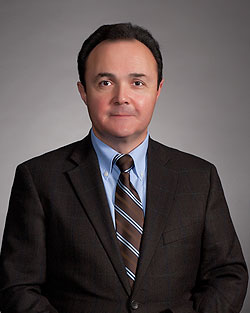
"After decades in both academia and industry, it's clear that a lot of valuable science never makes it out of the lab," said Macheret. "We need to accelerate the process of turning deep research into solutions people can use."
As the founder and CEO of US Plasma Engineering LLC, and a former professor at Purdue University, Macheret brings decades of experience spanning Princeton, Lockheed Martin Skunk Works®, and the Kurchatov Institute in Moscow. He believes the next frontier for plasma innovation lies not in discovering more theories, but in applying what we already know-at scale.
Why Plasma Applications Matter Now
Plasma-the fourth state of matter-is already used in propulsion, energy generation, materials processing, and medical sterilisation. But its broader adoption is limited by infrastructure gaps and a lack of focus on engineering readiness.
According to a 2023 study by the U.S. Department of Energy, more than 70% of publicly funded plasma research does not move beyond the academic stage. This slows progress in high-priority areas like hypersonic flight, magnetohydrodynamic (MHD) energy systems, and plasma-based flow control for aviation and manufacturing.
"Fundamental research is important," Macheret noted, "but when a great concept sits in a drawer for 10 years because no one engineers it for real use, that's a problem."
Lessons From the Lab and the Field
Macheret's career offers a rare blend of high-level research and real-world engineering. At Lockheed Martin's Skunk Works®, he applied plasma science to classified aerospace programs-transforming theoretical concepts into hardware that could fly.
At Purdue, he led cutting-edge research in non-equilibrium plasma control and aerospace applications of MHD, while mentoring future leaders in aerospace engineering and electrical systems.
His work earned him multiple awards, including the 2022 AIAA Plasmadynamics and Lasers Award, which recognised his "pioneering work on novel plasma generation and control methods and on aerospace applications of plasmas."
"You learn fast in places like Skunk Works that theory has to meet the deadline," said Macheret. "That mindset needs to spread back into academia."
What Institutions and Researchers Can Do
Macheret is calling for a stronger bridge between academia and industry-especially in physics and aerospace engineering programs.
He recommends five actions institutions and researchers can take now:
1. Build Plasma Engineering Testbeds
Academic labs should invest in small-scale, repeatable test systems designed to move research beyond equations. "If you can't test it, you can't improve it," he says.
2. Focus on Cross-Disciplinary Collaboration
Plasma research often sits in physics departments. Macheret suggests stronger collaboration with electrical, aerospace, chemical, and mechanical engineers to improve system-level thinking.
3. Align with Commercial and Defense Needs
Researchers should study real-world roadmaps from space agencies, defense contractors, and the clean energy sector. "Design your research for the next five years of industry need, not the last ten years of theory," he advises.
4. Work and Publish With Application in Mind
Too many papers focus only on measuring or simulating this and that. Macheret encourages researchers to think what the application could be and what needs to be done to develop such application.
5. Train Students to Build, Not Just Model
Graduate programs must include engineering practice, system prototyping, and hands-on project delivery-not just simulations and literature reviews.
A Call to Engineers, Scientists, and Institutions
Dr. Macheret is inviting engineers, researchers, graduate students, and science-focused institutions to reassess how their work connects to the real world.
"If your research is never used, it's not really finished," he said. "We need a generation of scientists who are also builders."
He believes that stronger partnerships between industry and academia-paired with a mindset shift in the lab-can unlock the full potential of plasma science and transform how it serves aerospace, energy, and beyond.
To read the full interview, visit the website here.
About Dr. Sergey Macheret
Dr. Sergey Macheret is a plasma physicist, aerospace engineer, professor, and founder of US Plasma Engineering LLC. He previously served at Lockheed Martin's Skunk Works®, Purdue University, and Princeton University. He is an elected Fellow of the American Institute of Aeronautics and Astronautics (AIAA) and has published more than 170 papers and 12 patents.
Media Contact:
Email: sergeymacheret@emaildn.com
SOURCE: Sergey Macheret
View the original press release on ACCESS Newswire