Samsung Electronics (KRX:005930) has shattered financial records with its fourth-quarter 2025 earnings guidance, signaling a definitive victory in its aggressive pivot toward artificial intelligence infrastructure. Releasing the figures on January 8, 2026, the South Korean tech giant reported a preliminary operating profit of 20 trillion won ($14.8 billion) on sales of 93 trillion won ($68.9 billion), marking a historic milestone for the company and the global semiconductor industry.
This unprecedented performance represents a 208% increase in operating profit compared to the same period in 2024, driven almost entirely by the insatiable demand for High Bandwidth Memory (HBM) and AI server components. As the world transitions from the "Year of AI Hype" to the "Year of AI Scaling," Samsung has emerged as the linchpin of the global supply chain, successfully challenging competitors and securing its position as a primary supplier for the industry's most advanced AI accelerators.
The Technical Engine of Growth: HBM3e and the HBM4 Horizon
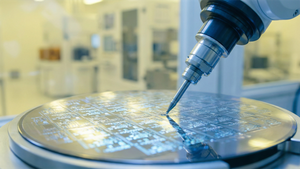
The cornerstone of Samsung’s Q4 success was the rapid scaling of its Device Solutions (DS) Division. After navigating a challenging qualification process throughout 2025, Samsung successfully began mass shipments of its 12-layer HBM3e chips to Nvidia (NASDAQ: NVDA) for use in its Blackwell-series GPUs. These chips, which stack memory vertically to provide the massive bandwidth required for Large Language Model (LLM) training, saw a 400% increase in shipment volume over the previous quarter. Technical experts point to Samsung’s proprietary Advanced Thermal Compression Non-Conductive Film (TC-NCF) technology as a key differentiator, allowing for higher stack density and improved thermal management in the 12-layer configurations.
Beyond HBM3e, the guidance highlights a significant shift in the broader memory market. Commodity DRAM prices for AI servers rose by nearly 50% in the final quarter of 2025, as demand for high-capacity DDR5 modules outpaced supply. Analysts from Susquehanna and KB Securities noted that the "AI Squeeze" is real: an AI server typically requires three to five times more memory than a standard enterprise server, and Samsung’s ability to leverage its massive "clean-room" capacity at the P4 facility in Pyeongtaek allowed it to capture market share that rivals SK Hynix (KRX:000660) and Micron (NASDAQ: MU) simply could not meet.
Redefining the Competitive Landscape of the AI Era
This earnings report sends a clear message to the Silicon Valley elite: Samsung is no longer playing catch-up. While SK Hynix held an early lead in the HBM market, Samsung’s sheer manufacturing scale and vertical integration are now shifting the balance of power. Major tech giants including Alphabet (NASDAQ: GOOGL), Meta (NASDAQ: META), and Microsoft (NASDAQ: MSFT) have reportedly signed multi-billion dollar long-term supply agreements with Samsung to insulate themselves from future shortages. These companies are building out "sovereign AI" and massive data center clusters that require millions of high-performance memory chips, making Samsung’s stability and volume a strategic asset.
The competitive implications extend to the processor market as well. By securing reliable HBM supply from Samsung, AMD (NASDAQ: AMD) has been able to ramp up production of its MI300 and MI350-series accelerators, providing the first viable large-scale alternative to Nvidia’s dominance. For startups in the AI space, the increased supply from Samsung is a welcome relief, potentially lowering the barrier to entry for training smaller, specialized models as memory bottlenecks begin to ease at the mid-market level.
A New Era for the Global Semiconductor Supply Chain
The Q4 2025 results underscore a fundamental shift in the broader AI landscape. We are witnessing the decoupling of the semiconductor industry from its traditional reliance on consumer electronics. While Samsung’s Mobile Experience (MX) division saw compressed margins due to rising component costs, the explosive growth in the enterprise AI sector more than compensated for the shortfall. This suggests that the "AI Supercycle" is not merely a bubble, but a structural realignment of the global economy where high-compute infrastructure is the new gold.
However, this rapid growth is not without its concerns. The concentration of the world’s most advanced memory production in a few facilities in South Korea remains a point of geopolitical tension. Furthermore, the "AI Squeeze" on commodity DRAM has led to price hikes for non-AI products, including laptops and gaming consoles, raising questions about inflationary pressures in the consumer tech sector. Comparisons are already being made to the 2000s internet boom, but experts argue that unlike the dot-com era, today’s growth is backed by tangible hardware sales and record-breaking profits rather than speculative valuations.
Looking Ahead: The Race to HBM4 and 2nm
The next frontier for Samsung is the transition to HBM4, which the company is slated to begin mass-producing in February 2026. This next generation of memory will integrate the logic die directly into the HBM stack, a move that requires unprecedented collaboration between memory designers and foundries. Samsung’s unique position as both a world-class memory maker and a leading foundry gives it a potential "one-stop-shop" advantage that competitors like SK Hynix—which must partner with TSMC—may find difficult to match.
Looking further into 2026, industry watchers are focusing on Samsung’s implementation of Gate-All-Around (GAA) technology on its 2nm process. If Samsung can successfully pair its 2nm logic with its HBM4 memory, it could offer a complete AI "system-on-package" that significantly reduces power consumption and latency. This synergy is expected to be the primary battleground for 2026 and 2027, as AI models move toward "edge" devices like smartphones and robotics that require extreme efficiency.
The Silicon Gold Rush Reaches Its Zenith
Samsung’s record-breaking Q4 2025 guidance is a watershed moment in the history of artificial intelligence. By delivering a 20 trillion won operating profit, the company has proven that the massive investments in AI infrastructure are yielding immediate, tangible financial rewards. This performance marks the end of the "uncertainty phase" for AI memory and the beginning of a sustained period of infrastructure-led growth that will define the next decade of technology.
As we move into the first quarter of 2026, investors and industry leaders should keep a close eye on the official earnings call later this month for specific details on HBM4 yields and 2nm customer wins. The primary takeaway is clear: the AI revolution is no longer just about software and algorithms—it is a battle of silicon, scale, and supply chains, and for the moment, Samsung is leading the charge.
This content is intended for informational purposes only and represents analysis of current AI developments.
TokenRing AI delivers enterprise-grade solutions for multi-agent AI workflow orchestration, AI-powered development tools, and seamless remote collaboration platforms.
For more information, visit https://www.tokenring.ai/.