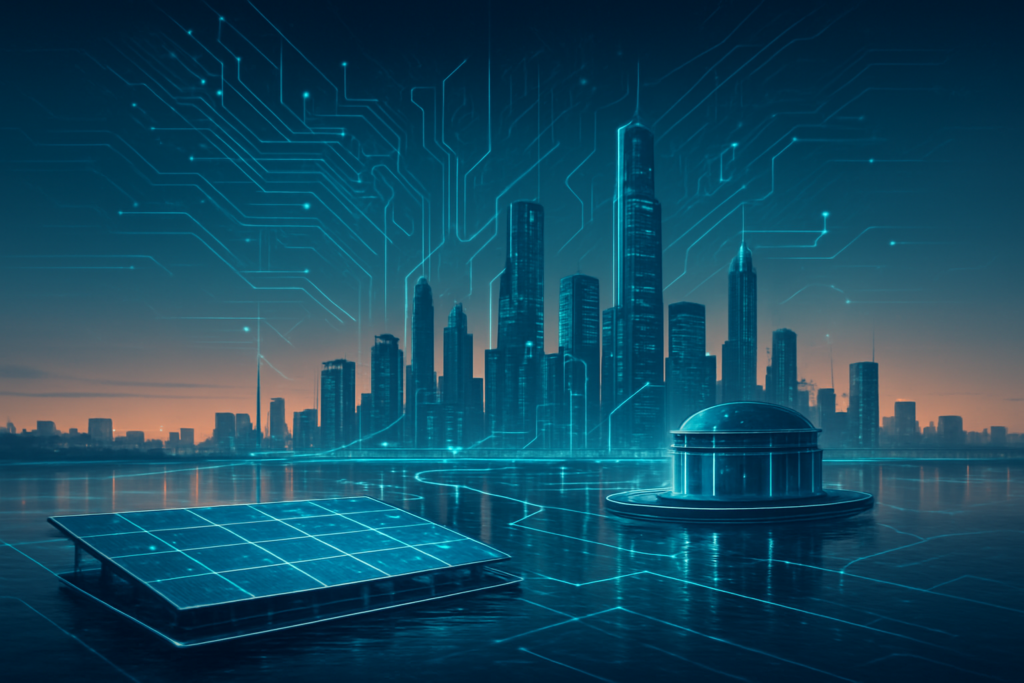
The Lagos State Government is embarking on a significant journey to bolster its energy and technology sectors through an intensified partnership with the Russian Federation. This bilateral push, highlighted by recent high-level diplomatic engagements, signals a strategic move by Nigeria's economic powerhouse to leverage Russian expertise and investment in critical infrastructure. With discussions spanning advanced solar power, floating nuclear plants, digital innovation, and even a new oil refinery, Lagos aims to address its burgeoning energy demands and accelerate its digital transformation agenda, promising a transformative impact on the state's economic landscape.
Innovative Energy Solutions and Digital Transformation at the Forefront
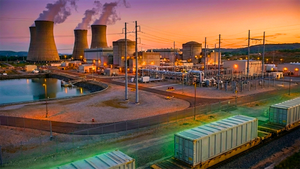
The core of this burgeoning partnership lies in specific, forward-looking projects designed to tackle Lagos's unique challenges, particularly its energy deficit and rapid urbanization. A key area of interest, as expressed during a recent courtesy visit on December 3, 2025, by Russian Ambassador Mr. Andrey Podyolyshev to Deputy Governor Dr. Obafemi Hamzat (representing Governor Babajide Sanwo-Olu), is the exploration of advanced energy solutions. This includes state-of-the-art solar power technologies and, notably, floating nuclear power plants. These proposed floating nuclear units, with capacities ranging from 100-200 MW and a lifespan of up to 60 years, represent a significant departure from traditional land-based power generation. For Lagos, with its extensive waterways and limited land, floating energy solutions offer a compelling advantage, mitigating space constraints and potentially providing a stable, high-capacity power source. This differs from previous approaches which often focused on grid expansion or conventional thermal power, by introducing innovative, modular, and potentially more environmentally adaptable energy infrastructure.
Beyond large-scale power generation, the partnership also encompasses immediate, tangible energy projects. Russia is set to establish a small-scale oil refinery in Lagos, projected to produce up to 6,000 barrels of petroleum products daily, as confirmed by Maxim Petrov, Russia's trade representative in Nigeria. This initiative aims to improve local fuel supply and reduce reliance on imported refined products. In the technology sphere, the collaboration extends to digital innovations, cybersecurity, and Artificial Intelligence (AI) integration. Russian companies are in negotiations for joint cybersecurity projects and are supporting Nigeria's broader efforts to embed AI into critical industries like banking, traffic management, and security—initiatives that will undoubtedly find significant application and development within Lagos. The initial reactions from the local tech community are cautiously optimistic, seeing the potential for knowledge transfer and infrastructure development, while also emphasizing the need for transparent implementation and technology localization.
Competitive Landscape and Market Positioning
This deepening bilateral tie is poised to create both opportunities and competitive shifts within the Nigerian, and specifically Lagosian, tech and energy sectors. Companies specializing in renewable energy solutions, particularly solar and potentially nuclear technologies, stand to benefit significantly. Russian state-owned atomic energy corporation Rosatom, a global leader in nuclear technology, could see expanded opportunities in Africa, especially with the interest in floating nuclear power plants, building on its existing 2009 agreement with Nigeria for peaceful nuclear energy cooperation. Similarly, Russian technology firms focused on AI, cybersecurity, and digital infrastructure could find a fertile ground for market entry and expansion in Lagos, a city actively pursuing digital transformation. Maxim Petrov's confirmation that five Russian companies are expected to register in the Lekki Free Trade Zone in Lagos in 2025 further underscores this direct investment interest.
For local Nigerian tech startups and energy companies, the implications are dual-edged. While the influx of foreign investment and technology could spur innovation and provide access to advanced solutions, it also presents a competitive challenge. Local firms will need to adapt, collaborate, or specialize to remain relevant. Tech giants already operating in Nigeria (e.g., Google (NASDAQ: GOOGL), Microsoft (NASDAQ: MSFT), Huawei) might face increased competition from Russian counterparts, particularly in government contracts and large-scale infrastructure projects related to digital transformation and cybersecurity. This could lead to a diversification of technology providers in the market, potentially fostering more competitive pricing and a wider array of solutions for the Lagos State Government. The strategic advantages for Russian companies include leveraging their established expertise in large-scale energy projects and their growing capabilities in AI and cybersecurity, positioning them as key partners in Nigeria's developmental agenda.
Broader Implications and Global Context
This partnership between Lagos and Russia fits into a broader global trend of emerging economies seeking diverse international collaborations to fuel their growth, moving beyond traditional Western alliances. For Lagos, it represents a strategic pivot to secure critical resources—energy and advanced technology—essential for its continued development as a megacity. The focus on floating nuclear power plants, in particular, highlights an innovative approach to energy security that could set a precedent for other coastal cities facing similar land constraints and energy demands. This move also reflects Nigeria's ongoing efforts to diversify its energy mix, reducing its heavy reliance on fossil fuels and exploring cleaner, more sustainable alternatives, albeit with the significant investment and regulatory hurdles associated with nuclear power.
Potential concerns, however, are not negligible. The long history of unfulfilled large-scale projects, such as the Ajaokuta Steel Complex (a previous Russian-Nigerian collaboration), serves as a cautionary tale, emphasizing the need for robust financial structures, transparent project management, and sustained political will. Additionally, the geopolitical context of such a partnership, especially with Russia, could draw international scrutiny and potentially affect Lagos's relationships with other global partners. Comparisons to previous AI milestones, while not directly applicable to this infrastructure deal, can be drawn in terms of the ambition for technological leapfrogging. Just as AI breakthroughs have rapidly reshaped industries, the successful implementation of advanced energy and digital infrastructure could fundamentally alter Lagos's economic trajectory and quality of life. The emphasis on integrating AI into critical sectors also aligns Lagos with global smart city initiatives, aiming for more efficient urban management and enhanced security.
Anticipated Future Developments
In the near term, experts predict an acceleration of technical and commercial negotiations to finalize the specific terms for the proposed energy and technology projects. The establishment of the small-scale oil refinery is expected to move forward swiftly, potentially reaching operational status within the next year or two, given the urgency of local refining capacity. We can also anticipate the formal registration and establishment of the five Russian companies within the Lekki Free Trade Zone in 2025, leading to initial investments and job creation. The discussions around floating nuclear and advanced solar power plants will likely progress through feasibility studies, regulatory approvals, and detailed financial modeling, which are inherently long-term endeavors.
Looking further ahead, successful implementation of these projects could position Lagos as a regional leader in innovative energy solutions and digital infrastructure. Potential applications include enhanced smart city capabilities, more reliable power supply for industries and homes, and a more robust cybersecurity framework. Challenges that need to be addressed include securing sustainable financing, navigating complex regulatory environments, ensuring technology transfer and local content development, and managing the environmental and safety considerations, especially for nuclear power. Experts predict that the success of these initial ventures will determine the scope and depth of future collaborations, potentially opening doors for Russian involvement in other Nigerian states or further expansion within Lagos's burgeoning digital economy and industrial zones.
A New Chapter for Lagos's Development
The Lagos State Government's renewed and intensified partnership with the Russian Federation marks a pivotal moment in its quest for energy security and technological advancement. Key takeaways include the strategic focus on innovative energy solutions like floating nuclear and advanced solar power, alongside immediate benefits from a new small-scale oil refinery and deeper collaboration in digital innovation and AI. This development signifies Lagos's proactive approach to diversifying its international partnerships and leveraging global expertise to address its unique developmental challenges.
The significance of this development in the broader context of African and global AI history lies in its potential to demonstrate how non-traditional alliances can drive technological leapfrogging in critical sectors. While not a direct AI breakthrough, the integration of AI into urban management and security, facilitated by this partnership, underscores a growing trend of AI being embedded into foundational infrastructure. The long-term impact could see Lagos emerge as a more resilient, digitally advanced, and energy-independent megacity, provided the ambitious plans translate into concrete, sustained projects. What to watch for in the coming weeks and months includes further announcements on project timelines, financing agreements, and the initial operationalization of the smaller-scale initiatives, which will serve as crucial indicators of the partnership's trajectory and effectiveness.
This content is intended for informational purposes only and represents analysis of current AI developments.
TokenRing AI delivers enterprise-grade solutions for multi-agent AI workflow orchestration, AI-powered development tools, and seamless remote collaboration platforms.
For more information, visit https://www.tokenring.ai/.