The dawn of 2026 has brought a seismic shift to the prediction market landscape, one that is blurring the lines between the regulated boardrooms of Washington D.C. and the permissionless protocols of decentralized finance. As of January 23, 2026, the focus of the trading world has shifted from specific election outcomes to the very infrastructure of the markets themselves. At the center of this revolution is Kalshi, the first CFTC-regulated prediction market, which has successfully bridged its order books onto the Solana (SOL) blockchain.
This technical expansion is not merely a change in venue; it is a fundamental re-engineering of how liquidity is accessed and distributed. By tokenizing its event contracts as SPL tokens and introducing a novel “Builder Codes” incentive program, Kalshi is attempting to create a global, decentralized front-end for regulated forecasting. Market analysts are watching closely as the platform’s "Yes/No" contracts—once confined to a single proprietary app—now circulate through decentralized exchanges (DEXs) and lending protocols, signaling a new era for real-world asset (RWA) tokenization.
The Market: What's Being Predicted
The "market" currently under the microscope isn't just a single event, but the adoption and performance of Kalshi’s new tokenized ecosystem. Since the official launch on December 1, 2025, Kalshi has partnered with DFlow to create a specialized tokenization layer. This API-driven system allows Kalshi’s federally regulated contracts—ranging from Fed interest rate decisions to movie box office results—to be minted as on-chain representations. These tokens mirror the liquidity of Kalshi’s central limit order book, providing what developers call "100% market coverage on-chain."
Trading volume has seen a massive surge as these contracts hit the Jupiter (JUP) aggregator, Solana’s largest decentralized exchange. By integrating with Jupiter, Kalshi has effectively placed its regulated markets in front of millions of active crypto wallets. The liquidity for these tokenized contracts is deep, bolstered by a hybrid request-for-quote (RFQ) and automated market maker (AMM) model that ensures trades on-chain are matched instantly with Kalshi’s underlying institutional order book. Settlement occurs in USDC, providing a stable and compliant medium for exchange that bridges the gap between traditional finance and DeFi.
Why Traders Are Betting
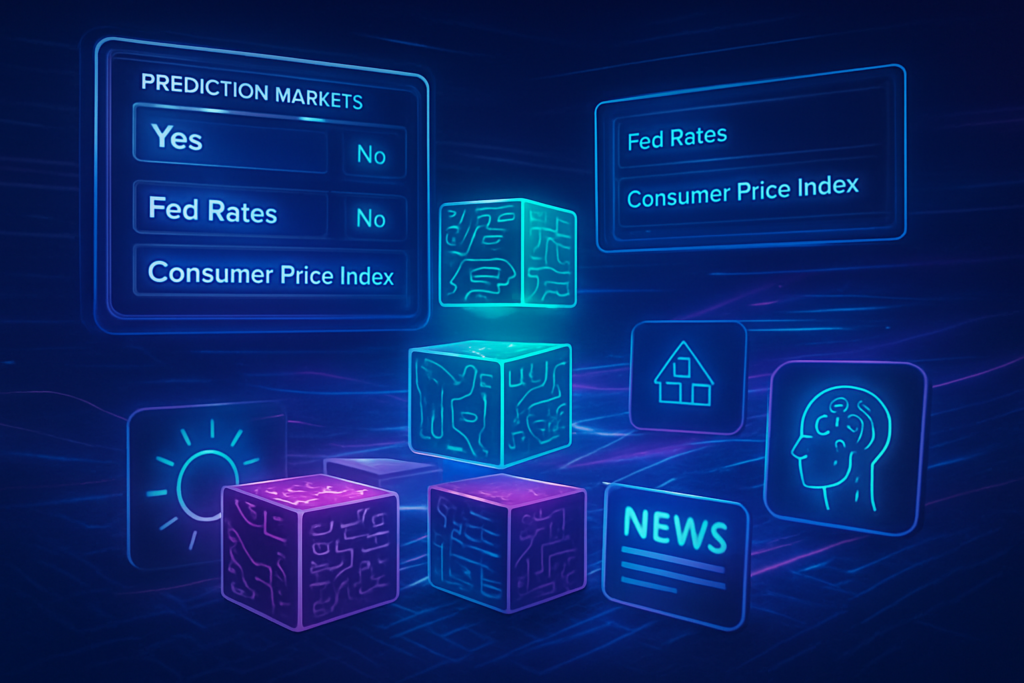
The primary driver behind the current momentum is the introduction of Builder Codes. This mechanism allows any third-party developer to integrate Kalshi’s markets into their own applications and earn a percentage of the trading fees generated. It is a "Lego-brick" approach to prediction markets: a weather app can now embed a "Will it snow in NYC?" contract directly into its interface, while a political news site can offer live betting on legislative votes.
Traders and developers are also being lured by the $2 million Builder Grant Program, which Kalshi launched in late 2025 to kickstart this ecosystem. Beyond the fees, the "composability" of these tokens is a major draw. For the first time, a trader can hold a "Yes" position on a Federal Reserve rate cut and use that position as collateral on lending platforms like Kamino or Marginfi. This allows for sophisticated hedging strategies that were previously impossible in the siloed world of traditional prediction markets.
Furthermore, the rise of AI agents has added a new layer of activity. Autonomous trading bots are utilizing Builder Codes to execute high-frequency trades across various front-ends, collecting rebate fees while providing essential liquidity to the network. This "machine-to-machine" economy is rapidly becoming a significant portion of Kalshi’s total daily volume.
Broader Context and Implications
This expansion is the culmination of a multi-year journey for Kalshi. Following a landmark legal victory against the Commodity Futures Trading Commission (CFTC) in late 2024, which cleared the way for regulated political event contracts, Kalshi found itself with the legal standing to challenge offshore rivals like Polymarket. However, while Polymarket dominated the crypto-native audience during the 2024 election cycle, Kalshi’s pivot to Solana is an attempt to capture both the regulatory high ground and the technical agility of DeFi.
The implications for the broader financial system are profound. By bringing regulated RWAs onto a high-speed blockchain like Solana, Kalshi is providing a blueprint for how other traditional assets—stocks, bonds, or commodities—might eventually be traded. It also reveals a shift in public sentiment: traders are increasingly demanding the transparency and instant settlement of blockchain technology, but with the legal protections afforded by a regulated exchange.
However, this move is not without its risks. The integration of regulated assets into permissionless DeFi protocols raises complex questions for regulators. While Kalshi remains the central counterparty and ensures KYC/AML compliance for its users, the movement of tokenized "claims" through secondary DEXs tests the boundaries of existing financial laws.
What to Watch Next
As we move deeper into 2026, the key metric for success will be the diversity of the "Powered by Kalshi" ecosystem. Watch for the emergence of "niche terminals"—specialized trading apps built by third parties that cater to specific sectors like sports, entertainment, or macro-economics. The success of these apps will determine whether Builder Codes can successfully decentralize the user acquisition process.
Another critical milestone will be the potential integration of these markets into major retail fintech platforms. Rumors have circulated that established players like Robinhood Markets, Inc. (NASDAQ: HOOD) or Coinbase Global, Inc. (NASDAQ: COIN) could leverage Kalshi’s Builder Codes to offer prediction markets to their massive user bases without having to build their own regulatory or liquidity infrastructure from scratch.
Finally, keep an eye on the liquidity depth of tokenized contracts during major "black swan" events. The true test of the Solana integration will be its ability to maintain stability and narrow spreads when market volatility spikes and thousands of AI agents and retail traders rush to adjust their positions simultaneously.
Bottom Line
Kalshi’s expansion into tokenized markets on Solana represents more than just a technical upgrade; it is the first major bridge between the "Wild West" of decentralized prediction markets and the regulated stability of the U.S. financial system. The introduction of Builder Codes effectively turns Kalshi into a liquidity layer for the entire internet, allowing any website or app to become a prediction market hub.
As the ecosystem grows, the distinction between "betting" and "hedging" continues to fade. For the average participant, the result is a more accessible, liquid, and versatile marketplace. Whether Kalshi can maintain its dominance in this new hybrid landscape remains to be seen, but the "Great Convergence" of 2026 has officially begun, and the prediction market industry will likely never be the same.
This article is for informational purposes only and does not constitute financial or betting advice. Prediction market participation may be subject to legal restrictions in your jurisdiction.
PredictStreet focuses on covering the latest developments in prediction markets. Visit the PredictStreet website at https://www.predictstreet.ai/.