The global financial landscape underwent a seismic shift this week as the formal nomination of Kevin Warsh to succeed Jerome Powell as Chair of the Federal Reserve reached the Senate floor. The move, finalized on March 4, 2026, marks the beginning of the end for the "Powell Era" of gradualism and heavy market intervention. In its place, Warsh brings a self-described "orthodox" doctrine that seeks to shrink the central bank’s footprint while simultaneously betting on an artificial intelligence-driven productivity boom to keep inflation at bay.
The immediate implications have been nothing short of a "bear steepening" in the bond market. As of March 9, 2026, investors are rapidly repricing the cost of long-term capital, anticipating a Federal Reserve that will no longer act as the buyer of last resort for Treasury and mortgage-backed securities. While the prospect of lower short-term rates has provided a floor for equity markets, the withdrawal of the "Fed Put"—the long-standing belief that the central bank would always step in to rescue falling markets—has introduced a level of volatility not seen since the post-pandemic inflationary spike of 2022.
A Pivot to 'QT-for-Cuts': The Warsh Doctrine Takes Shape
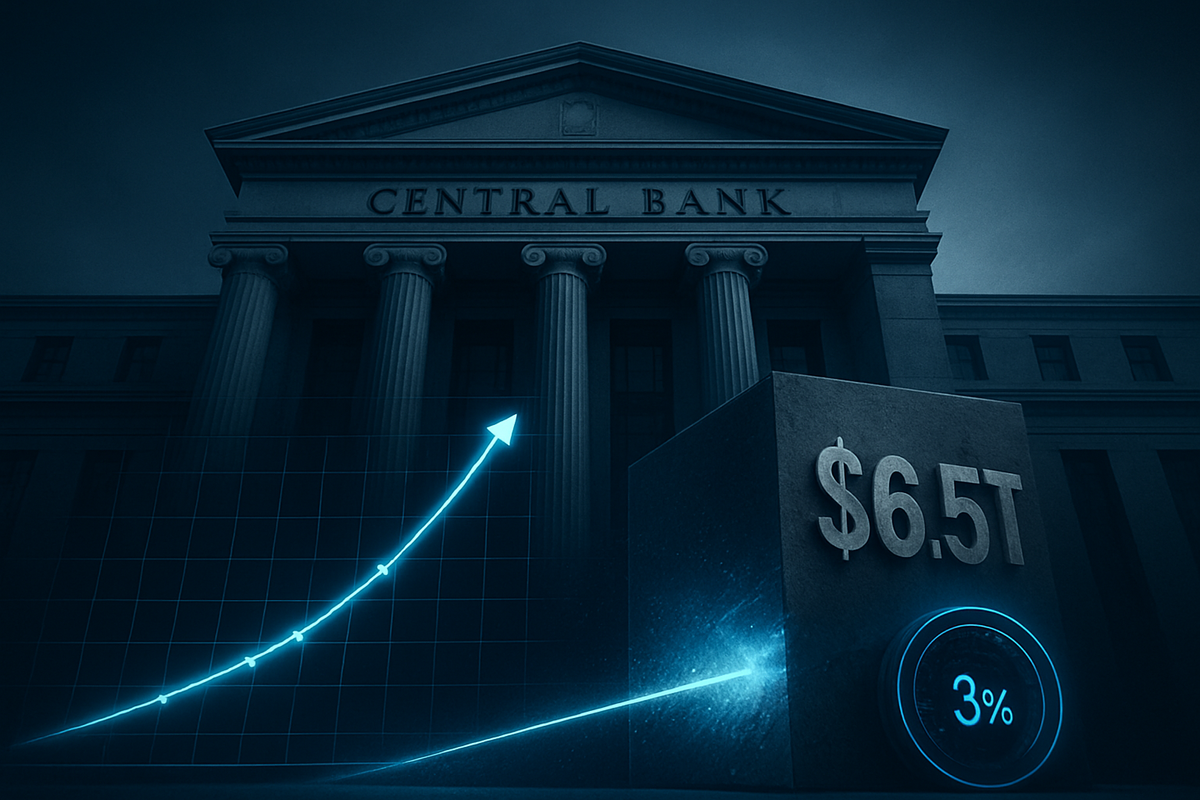
The nomination of Kevin Warsh comes at a critical juncture, with Jerome Powell’s term set to expire on May 15, 2026. Warsh, a former Fed Governor known for his "Sound Money" advocacy, has introduced a policy framework being dubbed "QT-for-Cuts." Under this strategy, Warsh intends to aggressively accelerate Quantitative Tightening (QT) by actively selling the Fed’s $6.5 trillion portfolio of Mortgage-Backed Securities (MBS). His goal is to return the central bank to a "Treasury-only" portfolio, effectively removing the Fed from the private credit markets.
This hawkish stance on the balance sheet is surprisingly paired with a dovish view on short-term interest rates. Warsh argues that the massive deployment of AI over the last 24 months has created a disinflationary productivity shock, allowing the Fed to cut the federal funds rate toward a 3.0%–3.25% target without triggering a wage-price spiral. This "monetary humility" approach favors letting market prices lead the way rather than relying on the "forward guidance" and complex econometric models that defined the Powell and Bernanke years.
The timeline leading to this moment has been fraught with political tension. The nomination follows months of speculation that the administration would seek a "rules-based" reformer to combat perceived overreach by the central bank. The announcement triggered an immediate surge in the 10-year Treasury yield, which jumped toward 4.75% as the market realized the era of passive balance sheet runoff was over.
Winners and Losers: Banking Giants vs. Real Estate Titans
The shift toward a steeper yield curve has created a clear divide among public companies. Major financial institutions like JPMorgan Chase (NYSE: JPM) and Bank of America (NYSE: BAC) have emerged as the primary winners of the "Warsh Shock." A steeper curve allows these banks to lend at higher long-term rates while paying less for short-term deposits, significantly boosting their Net Interest Margins (NIM). Analysts at major brokerages have already upgraded the sector, citing Warsh’s preference for market-based resilience over the "heavy-handed" regulatory approach of the previous four years.
Conversely, the housing and commercial real estate sectors are bracing for a prolonged winter. Companies that rely on low long-term borrowing costs, such as Rocket Companies (NYSE: RKT) and United Wholesale Mortgage (NYSE: UWMC), saw their share prices tumble as the prospect of active MBS sales by the Fed threatened to keep mortgage rates elevated even as the Fed cuts short-term rates. In the commercial space, giants like Prologis (NYSE: PLD) and Vornado Realty Trust (NYSE: VNO) are facing a "valuation nightmare." These firms must now refinance a "maturity wall" of debt at long-term yields that reflect a market no longer subsidized by central bank purchases.
Technology leaders with fortress balance sheets, particularly Nvidia (NASDAQ: NVDA) and Microsoft (NASDAQ: MSFT), have remained largely insulated. Investors view these companies as the engines of the very "productivity shock" that Warsh cites as his justification for lower rates. However, speculative "growth" companies that lack positive cash flow have seen their valuations slashed as the "term premium"—the extra yield investors demand for holding long-term debt—returns to the market in full force.
Restoring the Rules: The Significance of a Shrinking Fed
The Warsh nomination signifies a broader industry trend toward "narrow banking" and the restoration of historical precedents. For the better part of two decades, the Federal Reserve has operated as an "improvisational" entity, using its balance sheet as a primary tool to manage economic crises. Warsh’s "orthodox" approach draws comparisons to the Volcker era or the implementation of the Taylor Rule, where policy is dictated by clear, transparent benchmarks rather than subjective "data-dependent" meetings.
The regulatory implications are profound. If Warsh succeeds in reducing the Fed's role to that of a currency steward rather than a market backstop, the ripple effects will be felt across global shadow banking and international currency markets. Competitors in the Eurozone and Japan may be forced to follow suit or risk massive capital flight as the U.S. dollar strengthens on the back of "sound money" principles. This move effectively ends the "Experimental Era" of central banking that began in 2008, signaling a return to a more disciplined, albeit more volatile, financial environment.
The Road to Confirmation: Volatility on the Horizon
Looking ahead, the short-term path for the markets is clouded by political maneuvering in Washington. While Warsh has broad support among fiscal conservatives, Senator Thom Tillis (R-NC) has signaled he may hold up the confirmation process due to an ongoing Justice Department investigation into Jerome Powell’s $2.5 billion renovation of the Fed's headquarters. This creates a "lame duck" period of extreme uncertainty, with the June 2026 FOMC meeting likely to see unprecedented volatility in interest rate futures.
In the long term, the market must adapt to a world where "monetary discipline" is the new mandate. Strategic pivots will be required for pension funds and insurance companies that have relied on the Fed to suppress long-term yields. While the transition may be painful for leveraged players, many economists believe that removing the Fed’s distortive influence on the bond market will eventually lead to more efficient capital allocation and a healthier, more sustainable economic expansion.
Final Assessment: What Investors Should Watch
The nomination of Kevin Warsh is more than just a change in leadership; it is a fundamental rewrite of the monetary playbook. The key takeaway for investors is that the "lower for longer" mantra has been replaced by "lean and rules-based." Moving forward, the market will have to function without the safety net of the Fed's balance sheet, placing a premium on companies with strong organic cash flow and low debt-refinancing needs.
Investors should keep a close eye on the 10-year Treasury yield and the spread between it and the 2-year note. A continued steepening of the curve will confirm that the "Warsh Shock" is here to stay. Additionally, the progress of the Senate Banking Committee hearings in late March will be the next major catalyst for market movement. As the "Powell Put" expires, the market’s ability to find its own floor will be the ultimate test of the new orthodox regime.
This content is intended for informational purposes only and is not financial advice.