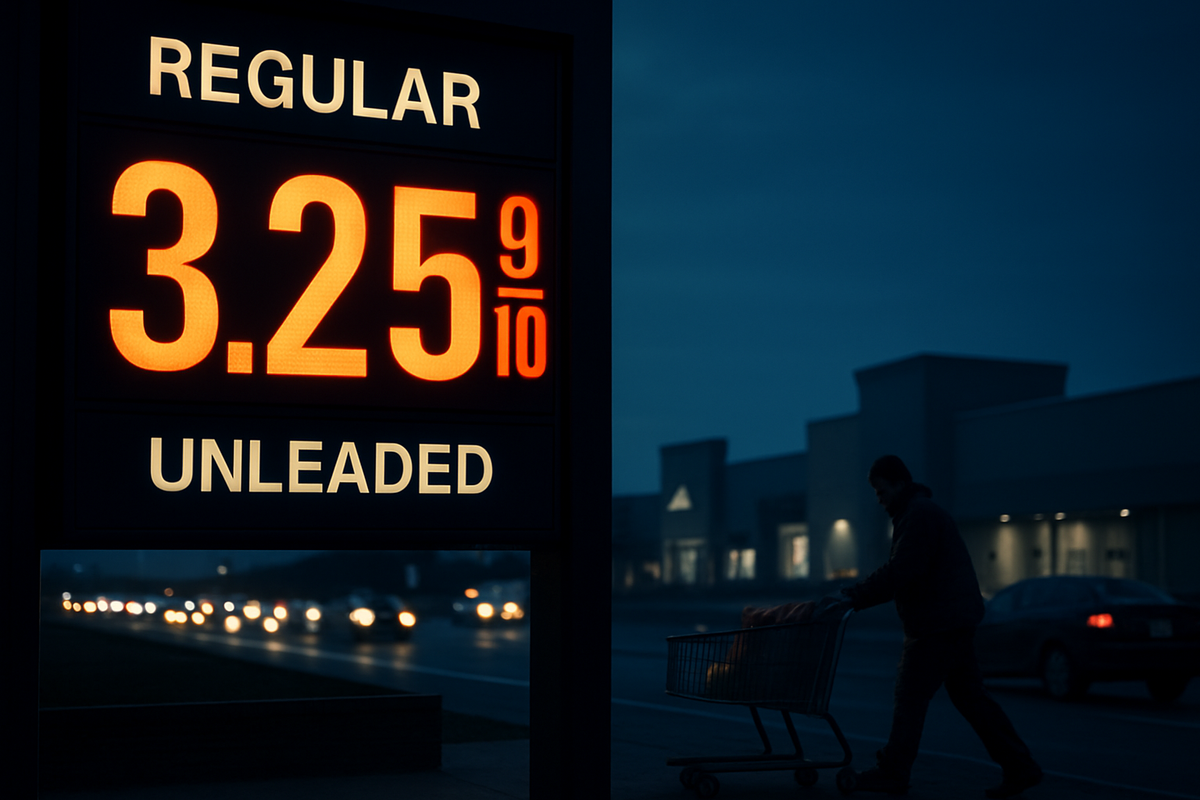
In a week that has sent shockwaves through the American economy, retail gasoline prices have surged by a staggering 9%, the sharpest weekly increase in nearly four years. As of March 5, 2026, the national average for a gallon of regular unleaded has hit $3.25, up from just $2.98 seven days ago. This sudden spike at the pump is threatening to derail the fragile post-inflationary stability the U.S. consumer has enjoyed, casting a shadow over the retail sector just as spring shopping season approaches.
The immediate implications are clear: the American household is facing an unexpected "gas tax" that siphons billions of dollars away from discretionary spending. Economists warn that if prices remain at these elevated levels, the retail industry could face a significant cooling period, as consumers prioritize fuel and essential groceries over apparel, electronics, and travel.
Geopolitical Tensions and Infrastructure Failures Drive the Spike
The catalyst for this sudden price explosion is a volatile cocktail of geopolitical conflict and infrastructure fragility. On February 28, 2026, a series of kinetic military strikes between U.S.-backed forces and Iranian infrastructure led to a de facto closure of the Strait of Hormuz. As nearly 20% of the world’s oil supply flows through this narrow waterway, the market reaction was instantaneous. Brent Crude prices leaped by 13% in 72 hours, soaring past $82 per barrel and igniting fears of a return to triple-digit oil prices.
The supply crunch was further exacerbated by targeted drone strikes on the Ras Tanura refinery in Saudi Arabia, the world’s largest oil stabilization plant. Domestic supply in the U.S. was already under pressure due to the scheduled decommissioning of two major refineries and a significant outage on the Olympic Pipeline in the Pacific Northwest. These localized shortages forced regional prices in states like Washington and Oregon to approach the $4.00 mark, pulling the national average upward at a record pace.
Industry observers were disappointed by the response from OPEC+. During their March 1 emergency meeting, the cartel announced a production increase of only 206,000 barrels per day for April. Market analysts, including those at Goldman Sachs, dismissed the move as "too little, too late," noting that the volume was insufficient to offset the immediate disruption of Middle Eastern exports. The lack of a robust supply cushion has left the global market uniquely vulnerable to this current shock.
Market Winners and Losers: Energy Giants vs. Retail Titans
The 9% surge has created a stark divergence in the equity markets, separating those who harvest the "fear premium" from those who must pay it. Energy majors have emerged as the primary beneficiaries of the volatility. Chevron (NYSE: CVX) saw its shares hit an all-time high of $189.60 this week, as investors flocked to its low-cost assets in the Permian Basin and Guyana. Similarly, ExxonMobil (NYSE: XOM) and Occidental Petroleum (NYSE: OXY) have seen significant gains, with refining margins, or "crack spreads," expanding rapidly as gasoline prices outpaced the rise in crude.
Conversely, the retail and logistics sectors are feeling the squeeze. Amazon (NASDAQ: AMZN) reported a 22% spike in warehousing and distribution fees, as fuel surcharges for its massive delivery fleet were adjusted upward. This has forced third-party sellers on the platform to raise prices, potentially cooling consumer demand. Big-box retailers like Target (NYSE: TGT) have already issued warnings; management noted that rising logistics costs could add over $1 billion in unforeseen expenses for the fiscal year, leading to a pivot away from high-margin home decor and apparel toward lower-margin basic consumables.
The pain is particularly acute for discount retailers and the travel industry. Dollar Tree (NASDAQ: DLTR) saw its stock decline as investors feared its core low-income customer base would be forced to cut spending to cover commuting costs. In the skies, United Airlines (NASDAQ: UAL) and American Airlines (NASDAQ: AAL) suffered losses exceeding 3% as jet fuel costs followed the gasoline spike upward. The travel sector’s misery was compounded by Norwegian Cruise Line (NYSE: NCLH), which fell nearly 12% as high gas prices traditionally lead to a sharp reduction in high-cost discretionary vacation bookings.
Broader Industry Trends and Policy Implications
This gasoline surge fits into a broader trend of "energy fragility" that has plagued the mid-2020s. Despite the transition toward electric vehicles, the U.S. economy remains deeply tethered to internal combustion engines for both personal transport and the "last mile" of the global supply chain. This event serves as a reminder that geopolitical stability in the Middle East remains the single most important factor in domestic inflation metrics. The current spike has essentially wiped out the "disinflationary" narrative that the Federal Reserve had been touting earlier this year.
The ripple effects are reaching beyond just the pump. Partners in the logistics chain, such as FedEx (NYSE: FDX) and UPS (NYSE: UPS), have implemented general rate increases of 5.9%, but effective costs for shippers are rising by as much as 18% once fuel surcharges are factored in. This "hidden inflation" in shipping costs often takes months to fully filter through to consumer prices, suggesting that the retail sector may face a prolonged period of margin compression even if gas prices stabilize.
Regulatory scrutiny is also expected to intensify. With a national average of $3.25 hitting just as the summer driving season approaches, there is growing pressure on the Biden administration to release further barrels from the Strategic Petroleum Reserve (SPR). However, with the SPR already at historically low levels following the interventions of 2022 and 2024, policymakers have fewer tools available to combat this surge than in previous decades, leading to a sense of gridlock in Washington.
The Path Ahead: Adaptation and Market Risks
In the short term, the primary focus for retailers will be "trip consolidation." Companies like Walmart (NYSE: WMT) may actually see a temporary boost in foot traffic as middle-class consumers—households earning over $100,000—seek to minimize their driving by buying groceries, household goods, and prescriptions in a single location. This "flight to value" is a classic defensive move during energy shocks, but it remains to be seen if the increase in traffic can offset the rising operational costs of keeping shelves stocked.
Longer-term, this spike may accelerate strategic pivots within the logistics industry. We are likely to see an increased urgency in the adoption of electric delivery vans and hydrogen-cell heavy trucking as companies seek to insulate themselves from the volatility of the oil market. However, these transitions require massive capital expenditures that many companies may be hesitant to undertake if their margins are being currently squeezed by the very fuel prices they seek to escape.
The potential for a "demand destruction" scenario is the primary concern for the coming months. If gasoline prices continue their upward trajectory toward $3.50 or $4.00, consumer sentiment could collapse, leading to a recessionary environment in the second half of 2026. Retailers will need to be extremely agile, managing inventory levels carefully to avoid being caught with excess "discretionary" stock that no one can afford to drive to the store to buy.
Navigating the Energy Shock
The 9% weekly surge in gasoline prices is a stark reminder of the global economy's sensitivity to geopolitical flares. While the $3.25 per gallon average might seem manageable compared to the highs of 2022, the velocity of the increase is what catches consumers and corporations off guard. For the retail sector, the coming weeks will be a test of resilience, as they balance rising costs against a consumer base that is suddenly feeling significantly poorer.
Investors should closely watch the "crack spreads" of major refiners and the quarterly guidance from large-scale retailers for signs of how deeply these costs are cutting into the bottom line. The market moving forward will likely remain volatile as long as the Strait of Hormuz remains contested and the global supply-demand balance stays on this razor's edge.
As we move into the spring, the primary indicator of economic health won't be found on a balance sheet, but on the glowing digital signs of the corner gas station. For now, the "gas tax" is back, and the U.S. consumer is once again footing the bill.
This content is intended for informational purposes only and is not financial advice