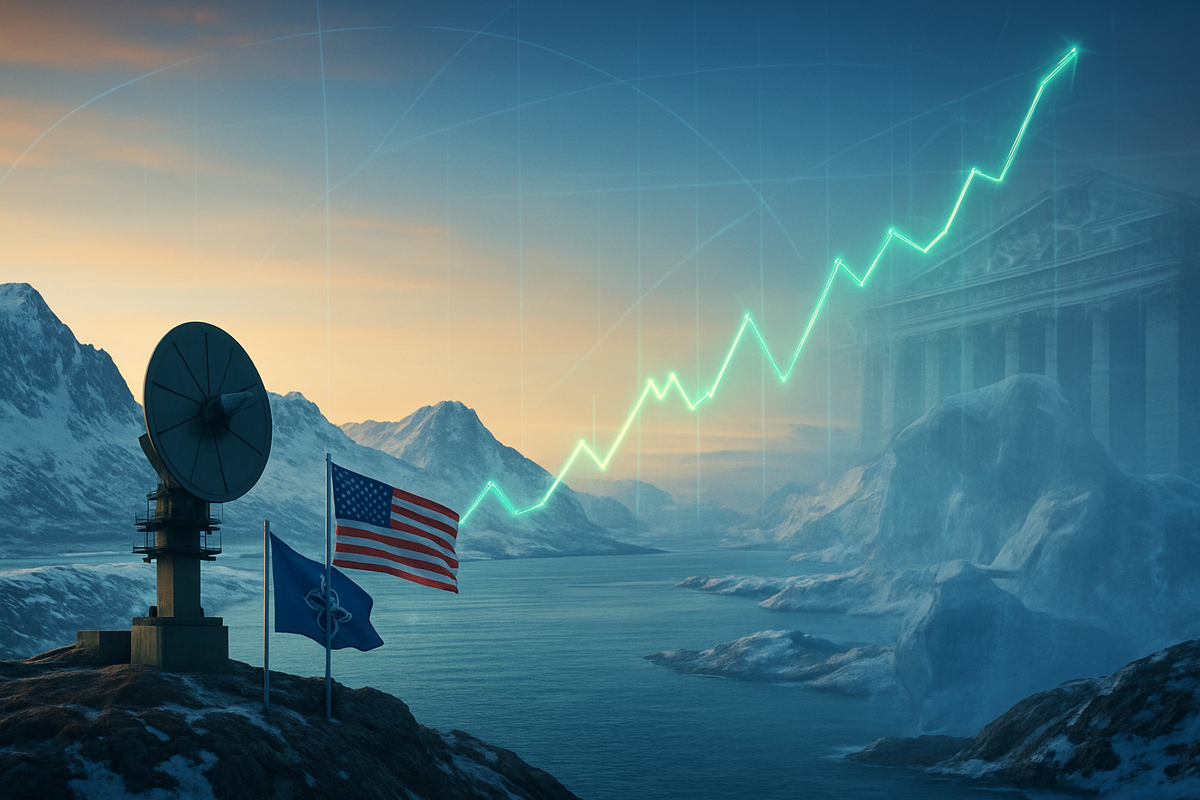
In a dramatic turn of events at the World Economic Forum in Davos, Switzerland, President Donald Trump has officially suspended a looming trade war with Europe, announcing a "framework of a deal" concerning the strategic status of Greenland. The announcement, delivered late Wednesday following a high-stakes meeting with NATO Secretary-General Mark Rutte, has triggered a significant relief rally across global markets. On Thursday, January 22, 2026, the Dow Jones Industrial Average and the S&P 500 both surged by more than 1%, as the immediate threat of punitive levies on eight European allies was removed.
The reversal marks a cooling of geopolitical tensions that had reached a boiling point earlier this month. The Trump administration had previously threatened to impose a 10% universal tariff on all goods from Denmark, Norway, Sweden, Finland, France, Germany, the United Kingdom, and the Netherlands starting February 1, 2026. With those plans now shelved in favor of a security-and-minerals cooperation pact, investor sentiment has shifted from defensive posturing back toward growth, as the specter of a broader transatlantic trade conflict begins to subside.
A Diplomatic Pivot in the Swiss Alps
The breakthrough occurred during a closed-door session between President Trump and Mark Rutte, where the two leaders reportedly reached an "understanding" that balances American strategic interests with European sovereignty. Central to the discussions was the "Golden Dome," a multibillion-dollar missile defense shield that the Trump administration views as essential for protecting the U.S. homeland. Trump had long argued that Greenland’s geographic position—specifically the Pituffik Space Base—is the linchpin for the system’s ground-based sensors and interceptors. By pivoting from a demand for the outright purchase of Greenland to a model of "enhanced security cooperation," the administration has managed to extract concessions without triggering a full-scale trade war.
The timeline leading to this reversal was remarkably compressed. Only weeks ago, the White House had designated Vice President JD Vance and Secretary of State Marco Rubio to spearhead a "Greenland Task Force," which initially used the threat of 10% tariffs as a primary negotiating lever. The proposed levies were scheduled to escalate to 25% by June 1, 2026, if progress on the Arctic territory remained stalled. However, the Davos meeting appears to have broken the deadlock. Trump designated Special Envoy Steve Witkoff to lead the finalization of the treaty, which will focus on U.S. mineral development rights and expanded military access in the Arctic region, while notably respecting the "red line" of Danish sovereignty.
Winners and Losers: Markets React to the Relief
The market reaction was swift and decisive. Intel Corporation (NASDAQ: INTC) emerged as one of the day's biggest winners, jumping 7.22% following the announcement. The semiconductor giant, which has significant supply chain ties and manufacturing interests across both the U.S. and Europe, benefited from the broader removal of trade uncertainty. Similarly, the regional banking sector saw a massive influx of capital, with the regional bank index surging 4.7% to hit its highest level since late 2024. Investors who had been bracing for a global economic slowdown caused by the tariffs moved quickly to re-enter risk-on positions.
European exporters breathed the loudest sigh of relief. Major players like Volkswagen AG (XETR:VOW3) and Thyssenkrupp AG (XETR:TKA) rallied in Frankfurt, as the 10% tariff threat had specifically targeted the German automotive and industrial sectors. In Denmark, Novo Nordisk A/S (CPH:NOVO-B) saw its shares stabilize after a period of volatility linked to the diplomatic spat. Conversely, the defense sector saw mixed results; while prime contractors involved in the Golden Dome, such as Lockheed Martin Corporation (NYSE: LMT), Northrop Grumman Corporation (NYSE: NOC), and RTX Corporation (NYSE: RTX), remained strong due to the project’s continued momentum, some European defense firms like Rheinmetall AG (XETR:RHM) saw slight dips as the immediate "threat level" of a geopolitical rupture cooled.
The 'TACO' Trade and the New Arctic Order
Financial analysts are already labeling this event as a classic example of the "TACO" trade—an acronym for "Trump Always Cancels Outrageousness." This market phenomenon involves the administration making maximalist, often disruptive demands that rattle markets, only to pivot to a more conventional negotiated settlement once leverage has been established. This pattern was visible in the 2019 Greenland purchase attempt and has once again proven to be a source of volatility followed by a sharp "relief rally." For the broader industry, this suggests that while geopolitical rhetoric may remain heated, the actual implementation of disruptive trade policy is often used as a tactical precursor to a deal.
The wider significance of this reversal lies in the formalization of the Arctic as a primary theater of 21st-century competition. By securing mineral development rights and a dedicated role for the Pituffik Space Base within the Golden Dome framework, the U.S. is effectively deepening its footprint in the High North. This has ripple effects for companies like ASML Holding N.V. (AMS:ASML) and Shell plc (LSE:SHEL), as the stability of European-American trade relations is paramount for the high-tech and energy sectors that rely on cross-border cooperation for both R&D and resource extraction.
Looking Ahead: From Framework to Treaty
In the short term, the market will be closely watching for the official text of the Greenland-NATO agreement. While the tariff threat is paused, it has not been permanently abolished, and the administration has hinted that the "February 1st reprieve" is contingent on the steady progress of the Witkoff-led negotiations. Investors should expect a series of secondary announcements regarding specific infrastructure projects in Greenland, particularly those involving U.S. defense contractors like The Boeing Company (NYSE: BA) and L3Harris Technologies, Inc. (NYSE: LHX), which are expected to bid on the ground-based components of the missile shield.
Long-term, the strategic pivot toward Arctic mineral rights could open new frontiers for Western mining and energy companies. However, the potential for friction remains. If the "framework" fails to translate into a binding treaty by the summer, the June 1st deadline for 25% tariffs could be reinstated. Market participants must weigh the current relief against the reality that Greenland remains a cornerstone of the Trump administration's "America First" security doctrine, making it a recurring source of potential market fluctuation in the months to come.
Closing Thoughts for Investors
The January relief rally underscores the market's intense sensitivity to trade-related headlines in the current administration. The 1% jump in the Dow and S&P 500 reflects a collective exhale from an investment community that was increasingly worried about a multi-front trade war during a period of delicate economic recovery. The key takeaway for the move forward is that while the "Greenland question" is far from settled, the shift from aggressive tariffs to a collaborative framework suggests a preference for a negotiated "win" over a disruptive "break."
Moving into February, investors should keep a close eye on the "Golden Dome" funding updates in Congress and any diplomatic statements from Copenhagen. The lasting impact of this event will be judged by whether the "framework" provides a stable foundation for transatlantic commerce or if it is merely a temporary ceasefire in a larger battle over Arctic dominance. For now, the "TACO" trade has once again rewarded those who bet on a deal, but the mercurial nature of these negotiations means that caution should remain the watchword for the first quarter of 2026.
This content is intended for informational purposes only and is not financial advice.