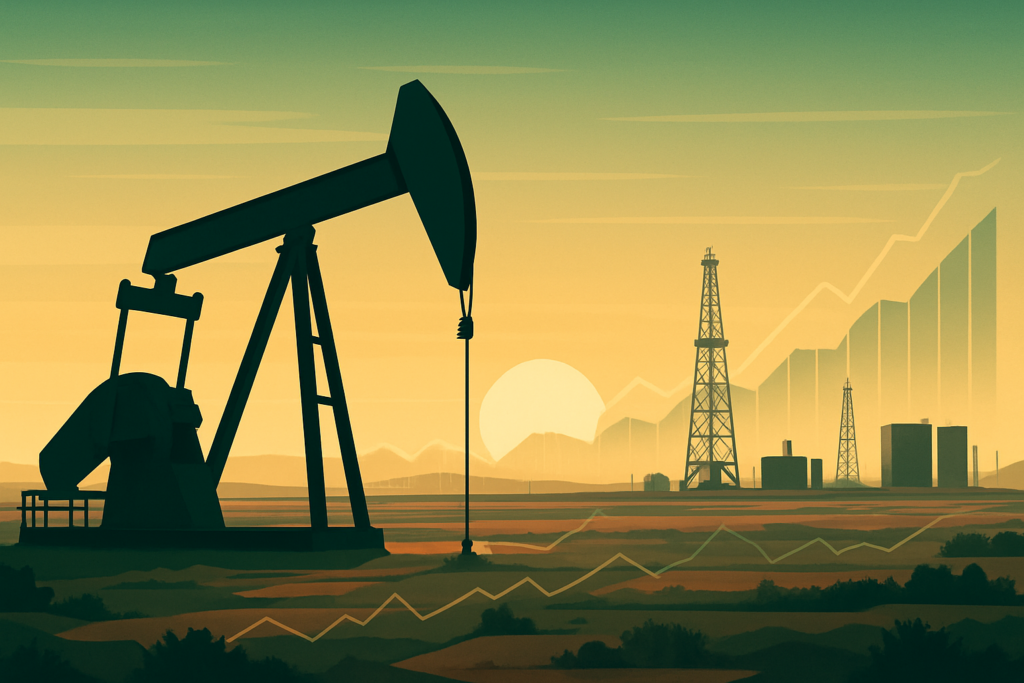
As of February 23, 2026, the energy sector’s eyes are fixed on Midland, Texas. Diamondback Energy (NASDAQ: FANG), the undisputed heavyweight champion of Permian Basin independent producers, has just released its fourth-quarter 2025 earnings. In a market defined by fluctuating crude prices and a fierce industry-wide mandate for capital discipline, Diamondback stands as a case study in scale and operational efficiency. Following its transformative $26 billion acquisition of Endeavor Energy Resources in late 2024, Diamondback has pivoted from an aggressive growth engine into a "Permian Juggernaut" that prioritizes free cash flow and debt reduction. Today’s earnings report confirms whether the company’s "Yellow Light" strategy—a cautious approach to production growth in a volatile price environment—is delivering the premium returns investors have come to expect.
Historical Background
Diamondback Energy’s ascent is one of the most remarkable stories in the American shale revolution. Founded in 2007 with backing from Wexford Capital and led by CEO Travis Stice, the company began with a modest acreage position in the Permian Basin. Its 2012 initial public offering (IPO) marked the beginning of a decade-long land grab.
Unlike many of its peers who overextended during the "shale boom," Diamondback became known for its "drill-to-earn" rather than "drill-to-grow" philosophy. Key transformations included the 2018 acquisition of Energen for $9.2 billion and the 2021 acquisition of QEP Resources. However, the defining moment in the company’s history occurred in February 2024, when it announced the merger with Endeavor Energy Resources. This deal effectively ended the "consolidation era" of the Midland Basin, creating a pure-play independent operator capable of competing with integrated majors like ExxonMobil (NYSE: XOM) and Chevron (NYSE: CVX).
Business Model
Diamondback Energy operates a streamlined, high-margin business model focused exclusively on the Permian Basin, primarily within the Midland and Delaware sub-basins. Its revenue is derived from the exploration, development, and production of oil, natural gas, and natural gas liquids (NGLs).
A unique facet of Diamondback’s model is its subsidiary structure, notably Viper Energy (NASDAQ: VNOM). Through Viper, Diamondback owns mineral interests and royalties, providing a high-margin revenue stream that is decoupled from the high capital expenditures (CapEx) of drilling operations. Additionally, the company maintains significant midstream interests, which it has recently begun to monetize or optimize to fund debt reduction. By controlling the "full stack" of the Permian value chain—from minerals to midstream—Diamondback minimizes third-party bottlenecks and maximizes its realized price per barrel.
Stock Performance Overview
Diamondback has historically been a top performer in the energy sector. As of February 23, 2026, FANG is up approximately 12.5% year-to-date, significantly outperforming the broader S&P 500 energy index.
- 1-Year Performance: The stock has seen a steady climb as the market gained confidence in the Endeavor integration, rising roughly 22% over the past 12 months.
- 5-Year Performance: Since the post-pandemic recovery of 2021, FANG has seen a meteoric rise, benefiting from the global energy crunch and its own disciplined capital allocation, yielding returns in excess of 250%.
- 10-Year Performance: Long-term shareholders have seen the stock weather the 2014-2016 and 2020 price crashes, ultimately emerging as a "blue-chip" shale play with a compound annual growth rate that rivals tech-sector performance.
Financial Performance
In the Q4 2025 results released today, Diamondback reported adjusted earnings per share (EPS) of $2.08, landing within the projected range of $2.00 to $2.11. Total revenue for the quarter reached $3.28 billion, reflecting a softer realized oil price environment (averaging $65/bbl WTI) compared to the previous year.
The company’s focus remains on the balance sheet. Following the Endeavor deal, Diamondback’s consolidated debt peaked near $18 billion; as of today’s report, that figure has been whittled down to $16.24 billion. Management reaffirmed its goal of reaching a $10 billion net debt target by the end of 2026. Free cash flow (FCF) remains robust, supporting a base dividend of $1.00 per share per quarter ($4.00 annualized), supplemented by opportunistic share buybacks from an authorized $8.0 billion program.
Leadership and Management
The leadership team, headed by CEO Travis Stice and President Kaes Van’t Hof, is widely regarded as one of the best in the E&P (Exploration & Production) space. Stice has been the steady hand since the IPO, while Van’t Hof is often credited as the architect of the company’s sophisticated financial and M&A strategies.
The management team is known for its transparency and alignment with shareholders. They were among the first in the industry to tie executive compensation to environmental, social, and governance (ESG) metrics and free cash flow generation rather than simple production growth. Their reputation for "operational excellence" is backed by some of the lowest cash operating costs in the Permian Basin.
Products, Services, and Innovations
Diamondback’s "product" is high-quality light sweet crude, but its "innovation" is in the process. The company has pioneered "continuous pumping" techniques and ultra-long lateral wells (exceeding 15,000 feet) that significantly lower the breakeven cost of each barrel.
In 2025, Diamondback expanded its use of AI-driven drilling analytics to optimize well spacing and frac design, reducing "parent-child" well interference—a common problem in the Permian where new wells underperform due to proximity to older ones. Furthermore, Diamondback’s investment in "Deep Blue" midstream assets and water recycling infrastructure has allowed it to reuse over 90% of its produced water, a critical cost-saver and environmental advantage in the arid West Texas climate.
Competitive Landscape
Diamondback occupies a unique "Goldilocks" position. It is large enough to achieve the economies of scale enjoyed by majors like ExxonMobil (which recently integrated Pioneer Natural Resources) and Chevron, yet small enough to remain nimble.
- Strengths: Lowest-in-class breakeven costs (estimated under $40/bbl WTI) and a decade-plus of "top-tier" drilling inventory.
- Weaknesses: Unlike Exxon or Chevron, Diamondback lacks downstream (refining) assets. This makes it more vulnerable to fluctuations in the price of crude oil compared to integrated companies that can hedge production with refining margins.
Industry and Market Trends
The "Shale 4.0" era is defined by maturity. The industry has moved away from the "growth at all costs" mantra of 2010–2019. Current trends include:
- Consolidation: The Permian is now dominated by a handful of massive players.
- Inventory Concerns: Analysts are increasingly focused on how many years of "Tier 1" (highest quality) acreage companies have left. Diamondback’s Endeavor acquisition was a strategic move to secure another 15+ years of such inventory.
- Natural Gas Glut: With the Permian producing record amounts of associated gas, Diamondback has had to navigate low regional gas prices, relying on firm transport agreements to move product to the Gulf Coast for export.
Risks and Challenges
Despite its strong position, Diamondback faces several headwinds:
- Commodity Price Volatility: A global slowdown or a surge in OPEC+ production could push WTI below $60, squeezing the margins necessary for the company’s aggressive debt-reduction plan.
- Regulatory Risk: The EPA’s tightening rules on methane emissions and potential restrictions on federal land leasing (though Diamondback is primarily on private land) present ongoing compliance costs.
- Execution Risk: While the Endeavor integration has been smooth so far, any operational hiccups in combining such massive legacy systems could impact the projected $550 million in annual synergies.
Opportunities and Catalysts
The primary catalyst for 2026 is the potential for a "credit upgrade." As Diamondback approaches its $10 billion debt target, credit rating agencies may move the company higher into investment-grade territory, lowering its cost of capital.
Another opportunity lies in the LNG (Liquefied Natural Gas) export boom. As new export terminals come online on the Texas coast in 2026 and 2027, Diamondback’s associated gas—previously a byproduct—could become a significant profit center if regional price differentials narrow.
Investor Sentiment and Analyst Coverage
Wall Street remains overwhelmingly bullish. Of the 32 analysts covering FANG, a vast majority hold "Strong Buy" ratings. The consensus view is that Diamondback is the "cleanest" way to play the Permian Basin. Institutional ownership remains high, with heavyweights like Vanguard and BlackRock holding significant stakes. Retail sentiment is similarly positive, bolstered by the company’s consistent dividend hikes and the transparency of its shareholder return framework.
Regulatory, Policy, and Geopolitical Factors
Geopolitical instability in the Middle East and Eastern Europe continues to provide a "risk premium" that supports oil prices, benefiting domestic producers like Diamondback. Domestically, the 2026 policy landscape is focused on infrastructure. The completion of new pipelines out of the Permian (such as the BANGL expansion) is crucial for Diamondback to avoid localized price discounts. Furthermore, the company’s proactive stance on reducing routine flaring has largely shielded it from the most aggressive ESG-related regulatory pressures.
Conclusion
Diamondback Energy’s Q4 2025 earnings report marks a milestone in its journey to becoming the premier American independent oil producer. By successfully absorbing Endeavor, the company has secured a dominant, high-quality inventory that should last well into the 2030s. While lower commodity prices compared to 2024 have moderated earnings growth, the company’s laser focus on debt reduction and capital efficiency provides a safety net for investors. For those looking for exposure to the "engine room" of American energy, Diamondback remains a formidable contender, provided they can stomach the inherent volatility of the oil markets.
This content is intended for informational purposes only and is not financial advice.